This post contains affiliate links. We may earn a commission if you buy via our links, at no extra cost to you. Full disclosure →
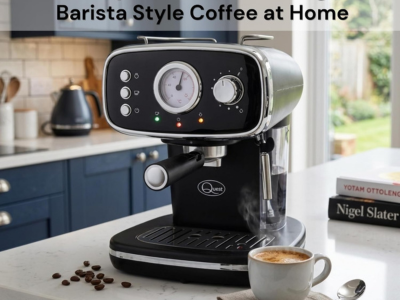
The retro espresso machine niche on Amazon UK is more competitive than it looks. Quest, a UK budget appliance brand best known for home essentials sold through Argos and Robert Dyas, has carved out a position in it with the 36569 — a 15-bar coffee machine with milk frother wand in a distinctive retro finish, currently holding Amazon’s Choice status at 4.1 stars from nearly 300 buyers.
At an estimated retail price of around £45, the Quest 36569 isn’t competing with the De’Longhi Dedica or the Sage Barista Express. It’s answering a different question: what’s the simplest, most visually appealing way to make espresso-style coffee and milk drinks at home without spending more than £50?
## What Is the Quest 36569?
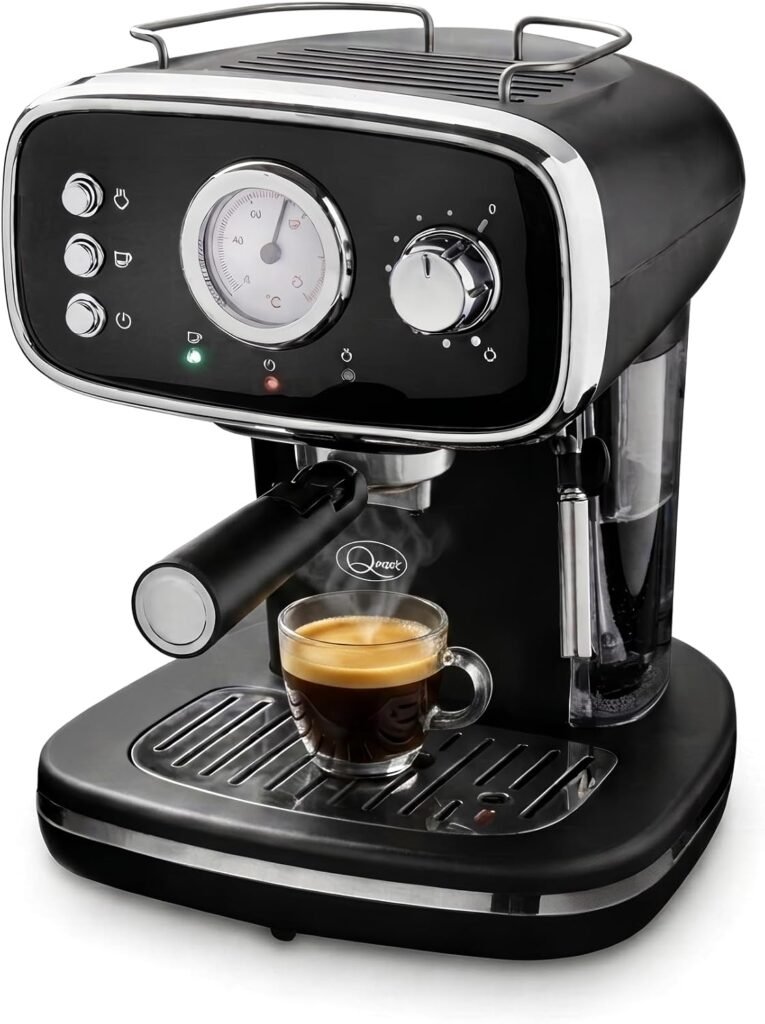
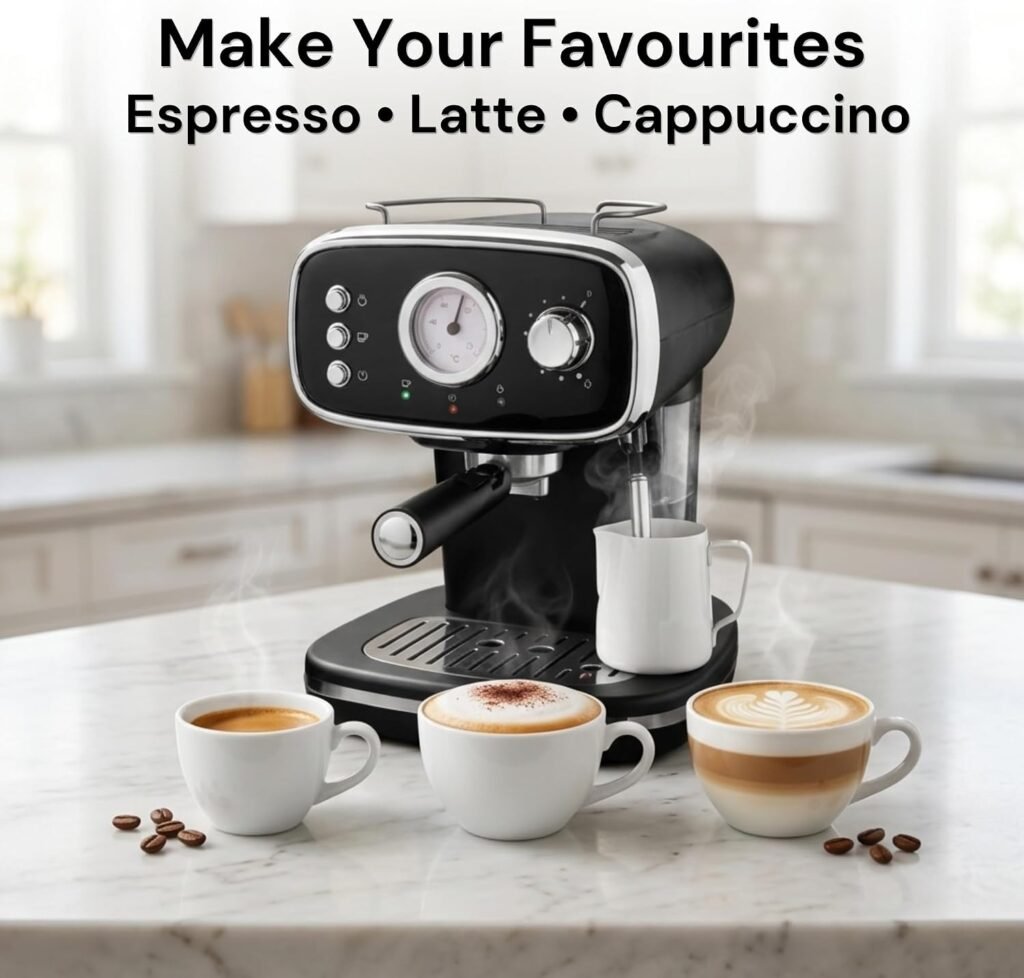
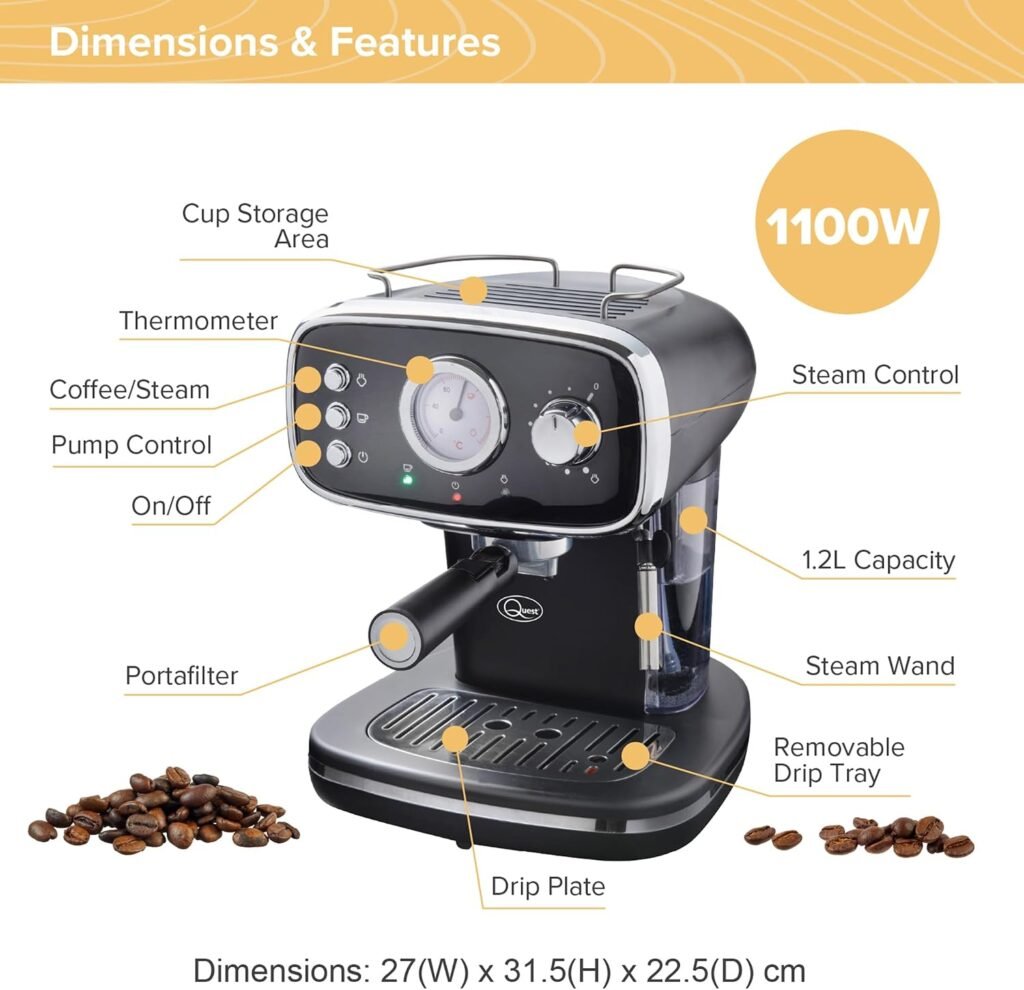
The Quest 36569 is a semi-automatic espresso machine for ground coffee. It’s a basic single-boiler pump machine: load ground coffee into the portafilter, tamp it, lock it in, and the 15-bar pump pushes hot water through the puck. The steam wand lets you froth milk for cappuccinos, lattes, and flat whites. A steam-ready indicator and temperature gauge sit on the front panel to help you time each stage.
That’s the complete feature set — no built-in grinder, no PID temperature control, no ESE pod compatibility, no app connectivity. This is a machine whose retro design does significant heavy lifting alongside a functional-but-basic specification.
## Design and Build Quality
The retro styling is the Quest 36569’s clearest differentiator. The black-and-silver finish, rounded lines, and visible analog-style steam and temperature indicator dials give it a visual character that’s closer to a vintage diner machine than to the generic chrome boxes that dominate this price bracket. In a sea of identical stainless-steel budget espresso machines under £100, it stands out clearly.
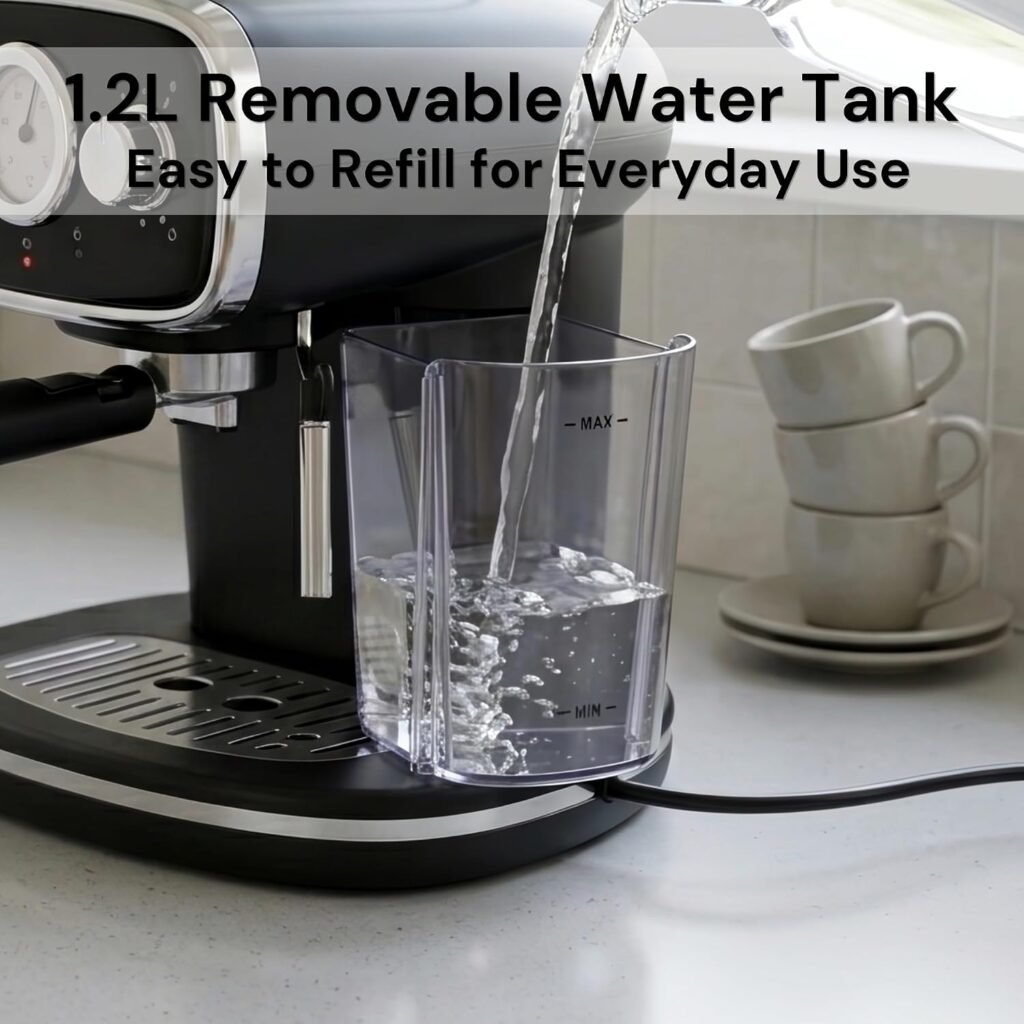
Dimensions are reasonably compact: 24D × 31W × 33.5H cm. Wider than the ultra-slim De’Longhi Dedica (15 cm) but considerably more manageable than a full-featured semi-automatic machine. The 1.2-litre removable water tank is generously sized for this category — larger than the Dedica’s 1L tank and sufficient for 4–5 espresso drinks before refilling.
Build quality is consistent with Quest’s positioning: functional and robust for everyday home use. The portafilter and group head are metal; the drip tray removes cleanly. The steam-ready indicator and temperature gauge are analog rather than digital readouts — appropriate to the retro aesthetic and simpler to read for a beginner than numerical displays.
## Espresso Quality
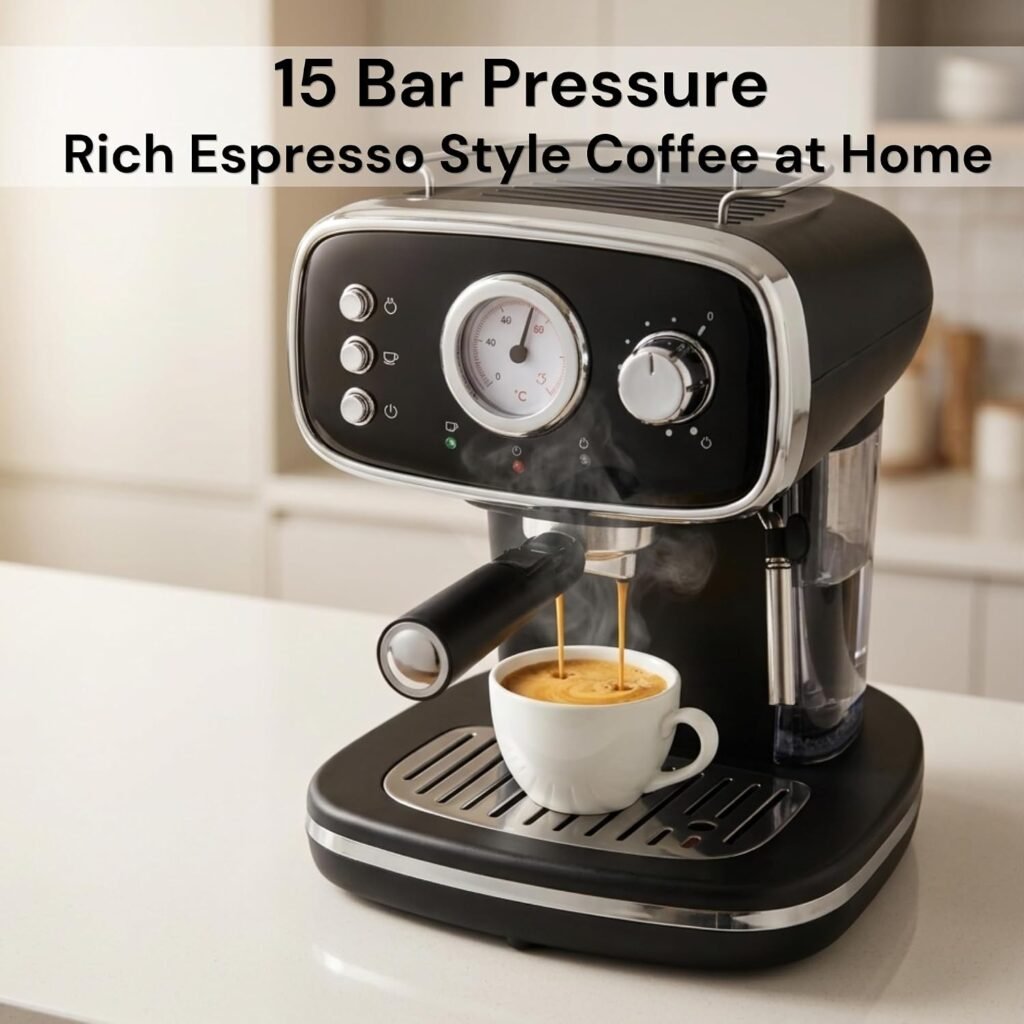
The 15-bar pump is standard for budget espresso machines. The De’Longhi Dedica, the De’Longhi Stilosa, the Swan retro espresso — all run at 15 bar. The Quest 36569 hits this benchmark reliably.
With quality pre-ground espresso coffee and correct technique, the result is a serviceable espresso with reasonable crema, adequate body, and a genuine step up from instant coffee or pod machines. The temperature gauge helps beginners identify when the machine has reached brew-ready temperature — a practical indicator that prevents the common mistake of pulling a shot before the thermoblock has fully heated.
The Quest 36569 does not have PID temperature control. The CASABREWS 3700 Essential — available at roughly £84 — does include PID at a similar budget price point. PID actively corrects water temperature during extraction, producing more consistent shots and better results with light roasts. Without it, temperature can vary between shots, affecting flavour. For dark-roast pre-ground espresso, the difference is less noticeable; for lighter, more nuanced roasts, it matters more.
## Milk Frothing: The Steam Wand
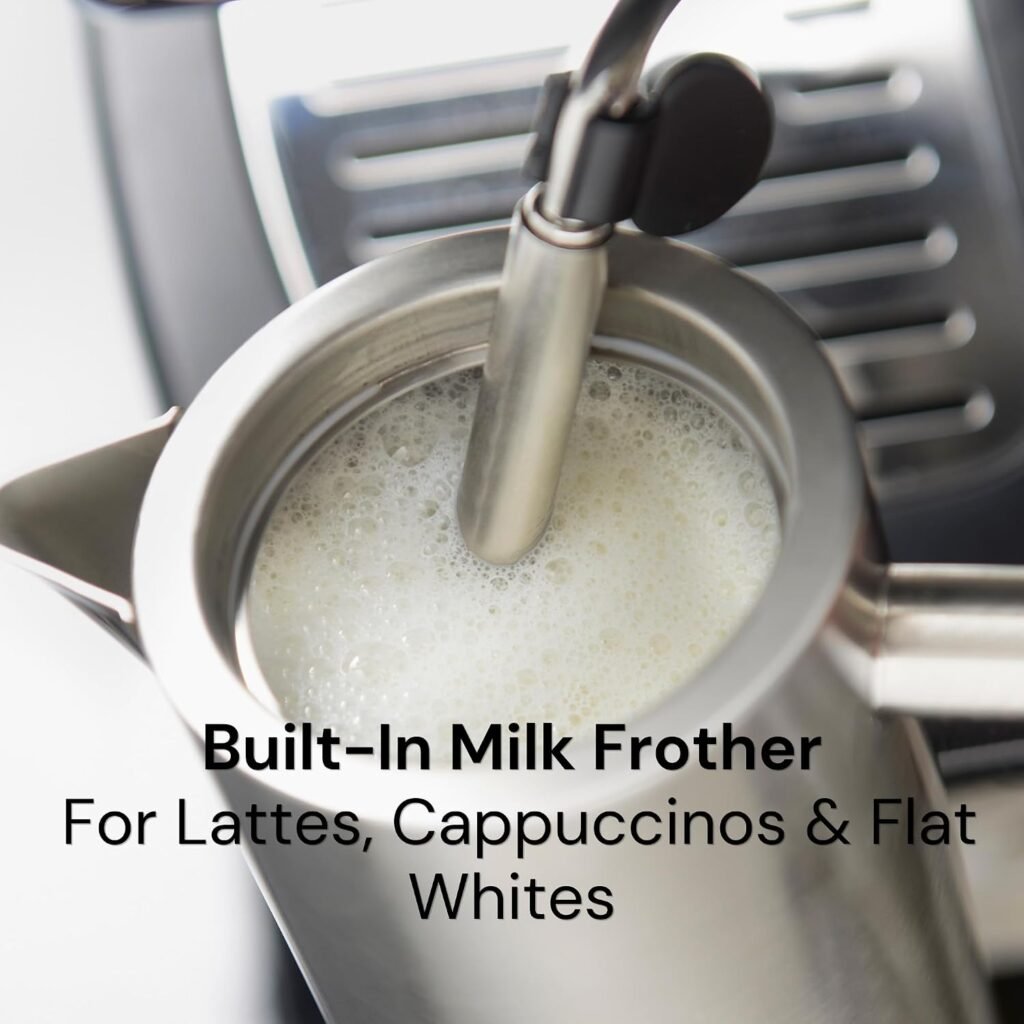
The manual steam wand produces adequate steam pressure for frothing milk for cappuccinos, lattes, and flat whites. Expect a learning curve of one to two weeks before you’re consistently producing good results — this is standard for all manual wand machines at any price, including the De’Longhi Dedica and CASABREWS 3700.
The steam-ready indicator on the front panel tells you when the wand is at frothing temperature — a useful guide that removes one common beginner error. The wand has clearance for a standard milk jug and generates enough steam to texture milk for two drinks before the boiler needs to recover. Switching between brew and steam modes adds 30–45 seconds to the workflow, which is typical for single-boiler machines at this price.
## Quest 36569 vs. CASABREWS 3700 Essential
The most direct specification comparison. Both are budget espresso machines with steam wands and ground-coffee-only operation. The CASABREWS 3700 has a 20-bar Italian pump (vs 15 bar), PID temperature control (vs none), 1.3L tank (vs 1.2L), an integrated cup warmer, and Global Recycled Standard certification. At approximately £84, it costs around £35–40 more than the Quest at typical pricing.
On paper specification, the CASABREWS wins clearly. The Quest’s only advantages are the retro design and the lower price. If maximum specification per pound is the goal, the CASABREWS 3700 Essential is the better choice. If the retro aesthetic is the priority and budget is tight, the Quest is a reasonable alternative.
## Quest 36569 vs. Swan Retro Espresso Machine
The most direct design comparison. Swan’s retro espresso machine (SK22110GRN) is the Quest 36569’s closest competitor in the retro segment: similar price, similar retro aesthetic, 1.2L tank, steam wand, 15-bar pump. Swan has over 4,000 reviews at 4.2 stars — a significantly larger review base than the Quest’s 292.
Swan’s broader colour range (Nordic grey, retro colourways) gives more kitchen-matching options. The Quest’s design lines are slightly different in character — bolder retro cues. At comparable prices, the decision between them comes down to design preference and whichever has the better price at the time of purchase.
## Quest 36569 vs. De’Longhi Dedica EC685M
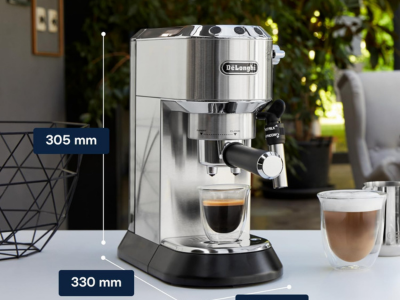
A step up in price and pedigree. The Dedica costs around £149 — more than three times the Quest’s price — but remains the most popular slim espresso machine in this category with 41,000+ reviews at 4.3 stars. The Dedica is ultra-slim at 15 cm wide vs the Quest’s 31 cm, offers ESE pod compatibility and three temperature settings, and has De’Longhi’s decades of engineering behind it.
If the budget allows the Dedica, its reliability track record and additional features justify the premium. The Quest 36569 is the right choice when the Dedica’s price is out of reach or when the retro aesthetic is a stronger priority than the slim profile.
## Who Should Buy the Quest 36569?
This machine suits: buyers for whom a distinctive retro design at the lowest possible espresso machine price is the main driver; first-time espresso machine buyers who want to try the category with minimal financial commitment; and kitchen aesthetes for whom how a machine looks on the worktop matters as much as its output.
It’s less suited to: buyers who want maximum specification per pound (the CASABREWS 3700 wins on spec at a higher price); those who need an ultra-slim footprint (the Dedica is less than half the width); or anyone who prioritises a large, proven review base before buying.
## Our Verdict
The Quest 36569 earns its Amazon’s Choice status in a specific, well-defined way: it delivers a retro design aesthetic and basic espresso-with-milk-frother capability at a price that undercuts virtually every named rival in this category. The coffee output is decent for the money, the steam wand works, and the 1.2L tank is generous.
The specification ceiling is low. No PID, no grinder, no pod compatibility, and a smaller review base than most established rivals. But as a budget retro coffee machine with milk frother that looks unlike anything else at this price, the Quest 36569 delivers exactly what it promises.
**Rating: 4.1/5** — Best retro design at budget price; the CASABREWS 3700 outspeccs it for around £40 more.