This post contains affiliate links. We may earn a commission if you buy via our links, at no extra cost to you. Full disclosure →
The De’Longhi Magnifica S ECAM22.110.B holds a record that few coffee machines can match: 50,178 Amazon reviews at 4.4 stars, making it the most reviewed bean-to-cup machine on Amazon UK. That review count is not marketing — it is a decade of daily use across tens of thousands of UK households, and it consistently points to the same conclusion: this machine makes genuinely good coffee, cleans up without drama, and lasts.
## What Kind of Machine This Is
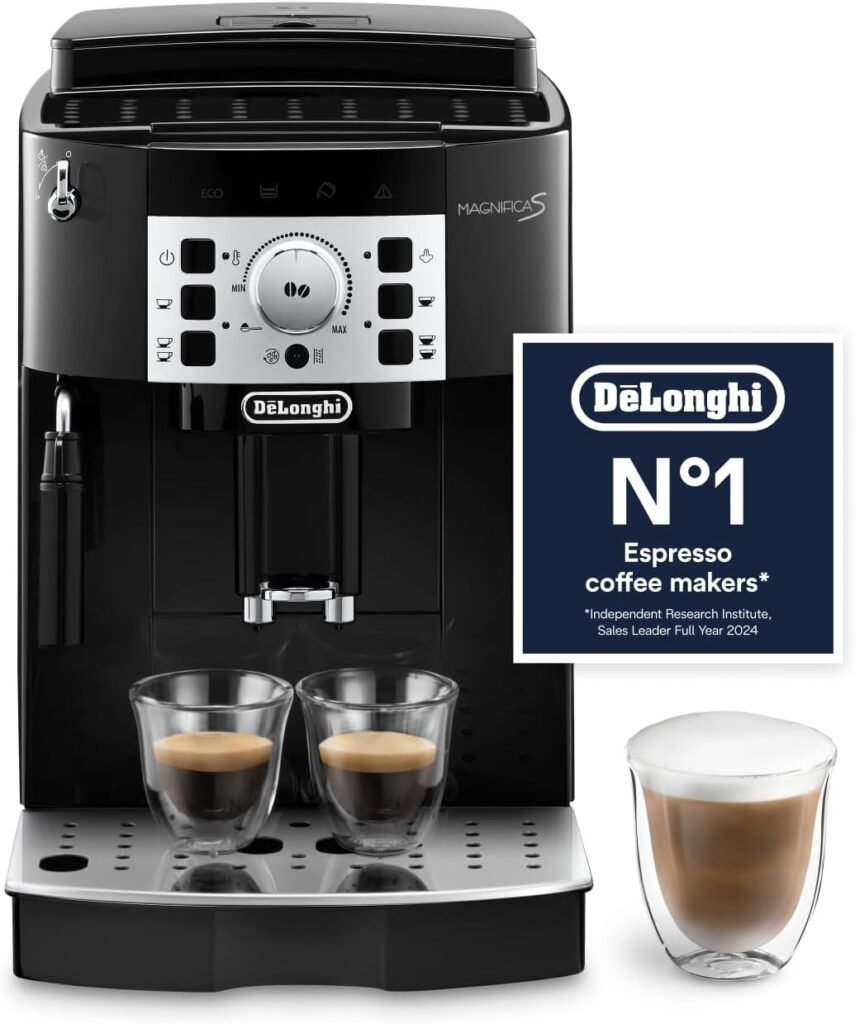
The Magnifica S is a fully automatic bean-to-cup coffee machine. You load whole coffee beans into the hopper, press one button, and it grinds, tamps, brews, and delivers espresso or coffee directly into your cup. No portafilter to fill. No tamping by hand. No separate grinder required.
This distinguishes it from semi-automatic espresso machines like the Sage Barista Express or Gaggia Classic Pro, where you grind, tamp, and pull the shot manually. The Magnifica S does all of that internally. The trade-off is control — a skilled barista cannot squeeze more from the Magnifica S by adjusting their technique, because the machine controls the process. What it delivers instead is consistent, repeatable results with no learning curve.
At around £269, it sits below the Sage Barista Touch (£799) and Philips 5400 LatteGo (£599) while offering the same core convenience: beans in, coffee out.
## The Grinder
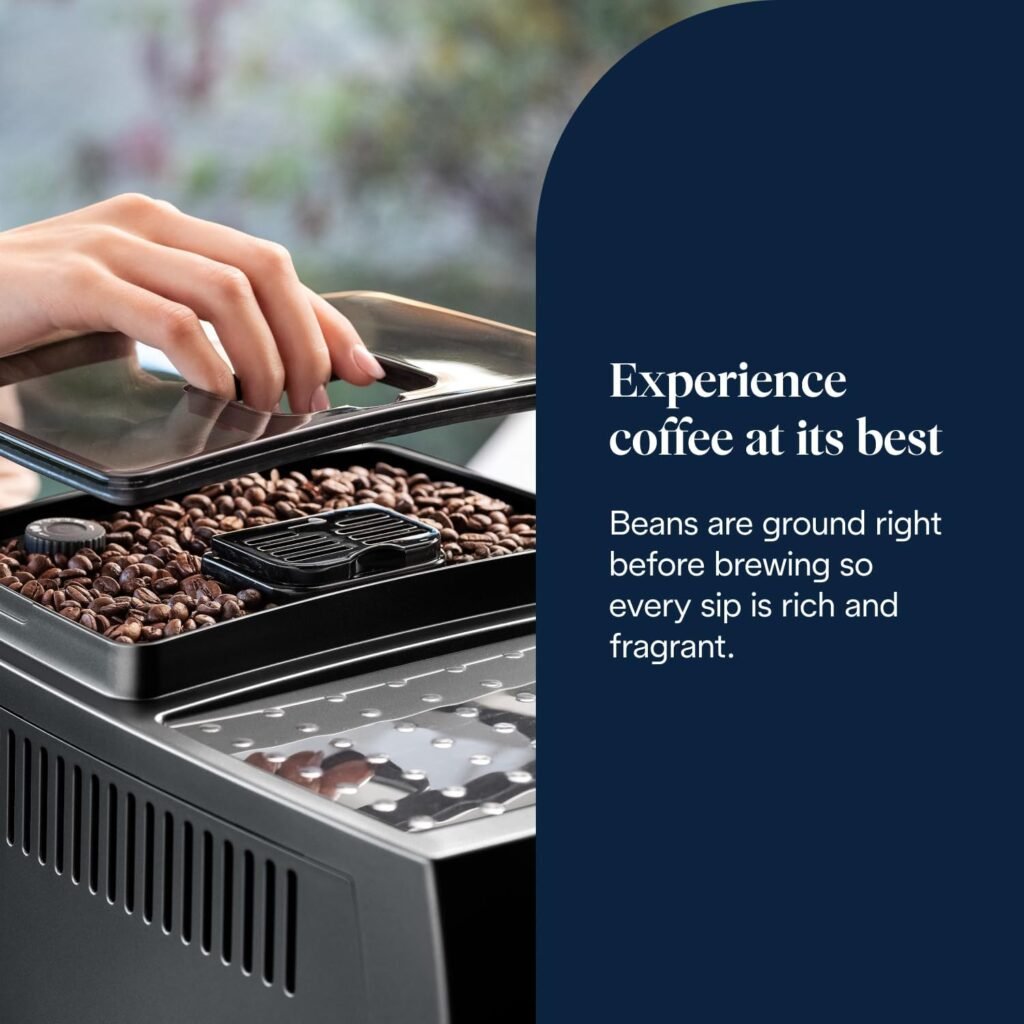
The integrated grinder has 13 settings, from coarse to fine, and De’Longhi markets it as silent — which in practice means significantly quieter than older-generation machines. It is not inaudible, but it is unlikely to wake a sleeping household member in an adjacent room.
The grinder accepts whole coffee beans loaded into the top hopper. It also has a bypass doser — a dedicated slot for pre-ground coffee — which is useful for decaf or flavoured coffee that you would not want contaminating the grinder. You cannot use both in the same brew cycle; it is one or the other per cup.
Grind setting adjustment follows a coarser-to-finer convention. To get a finer grind, you must run the machine through several cycles — the setting only takes effect when beans are actively being ground, not when you turn the dial. This is the same on virtually all integrated grinders at this price and is not a Magnifica-specific limitation, but it is worth understanding before you assume a simple dial adjustment will immediately change the flavour of the next cup.
## Brewing and Coffee Quality
The Magnifica S extracts at 15 bar pump pressure, which is standard for the category. The brew temperature and volume are both adjustable, giving a meaningful degree of customisation within the machine’s interface.
The coffee quality is consistently described by owners as a genuine step up from pod machines and drip coffee. At the 5–7 grind setting range (mid-fine), it produces espresso with reasonable crema and a full body. The flavour profile depends heavily on the beans — the machine is a faithful interpreter of the coffee you put in. A supermarket own-brand blend will taste like a supermarket own-brand blend; a fresh specialty roast will taste noticeably better. The grinder does contribute real flavour improvement over pre-ground coffee, and this is probably the single most significant advantage the Magnifica S holds over pod machines.
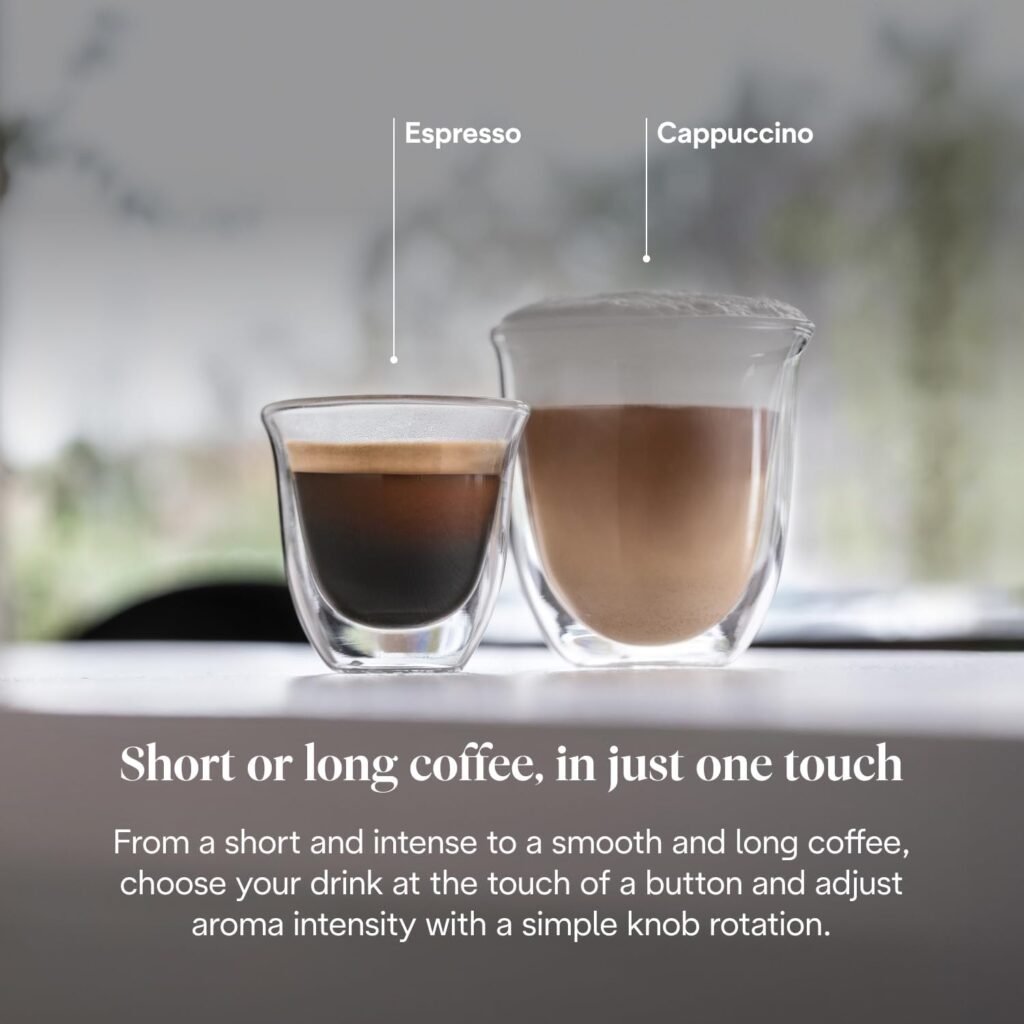
The simultaneous dual-cup function brews two espressos at once, which matters for households where two people want coffee at the same time.
## The Milk System
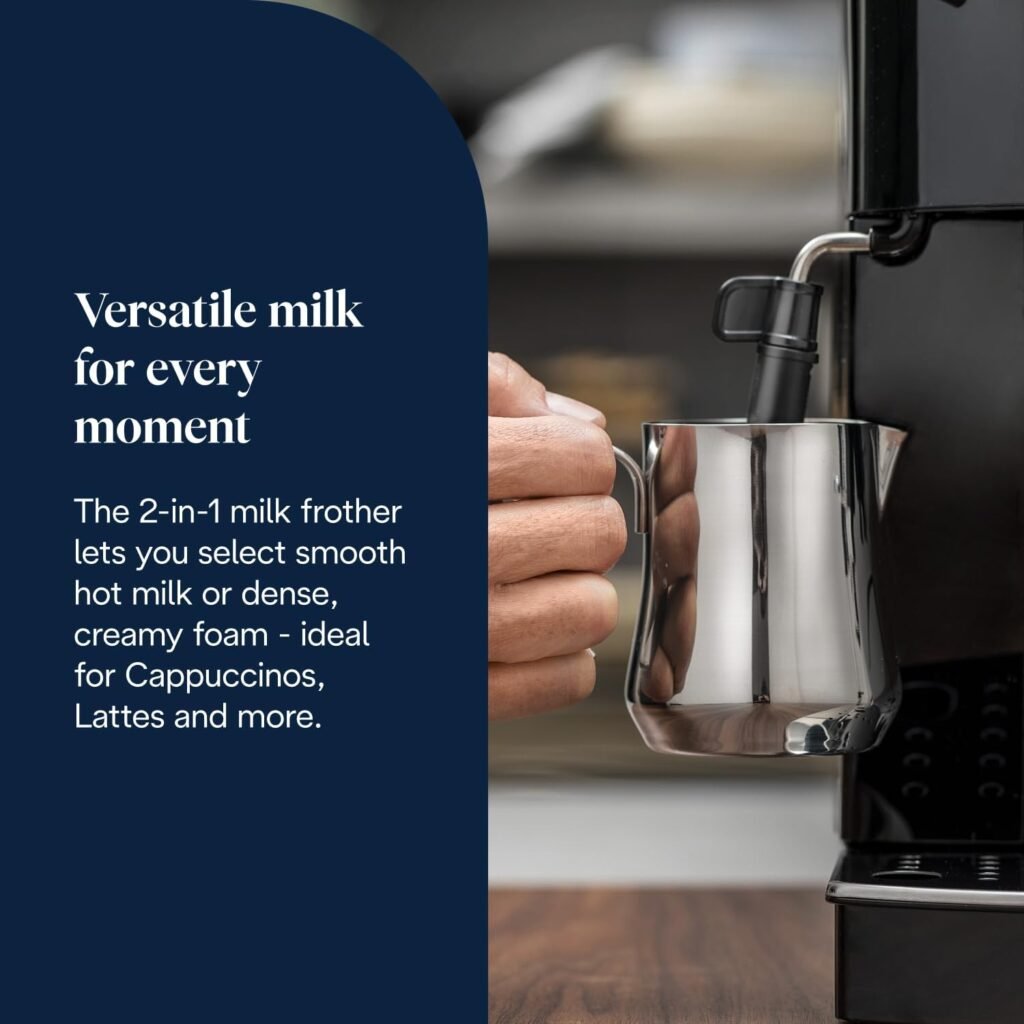
The Magnifica S ECAM22.110.B uses a manual Panarello steam wand. This is an important distinction from the higher-tier Magnifica variants, which offer automatic milk systems.
A Panarello wand is a steam lance with an air-intake collar that automatically introduces air into the milk as you steam. It produces froth without the technique required by a bare steam lance, but it requires more skill than a fully automatic milk system. The wand must be submerged in milk, moved to achieve the right texture, and the resulting foam quality varies with practice.
For cappuccino — a drink with a thick, dry foam — the Panarello performs well and most owners describe learning the right technique within a few uses. For latte art or textured microfoam, it is less suitable. If cafe-quality latte art is the goal, a machine with a bare steam lance (like the Gaggia Classic Pro) or an automatic milk system (like the Magnifica Evo Automatic) is more appropriate.
The machine includes an auto-clean function for the steam wand. After steaming milk, initiating the clean cycle runs hot water and steam through the wand, preventing milk residue from building up inside. This takes about 10 seconds and significantly reduces the cleaning burden compared to machines without this function.
## Daily Workflow and Ease of Use
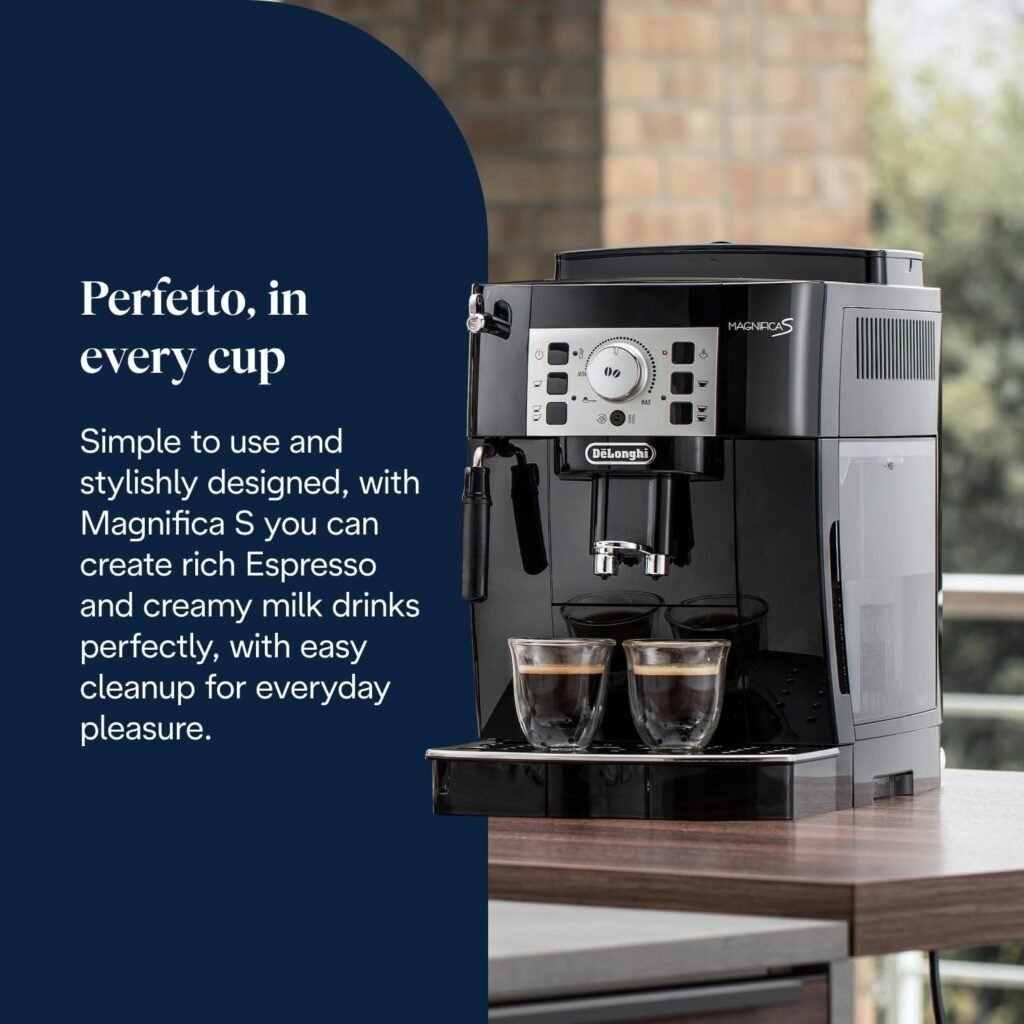
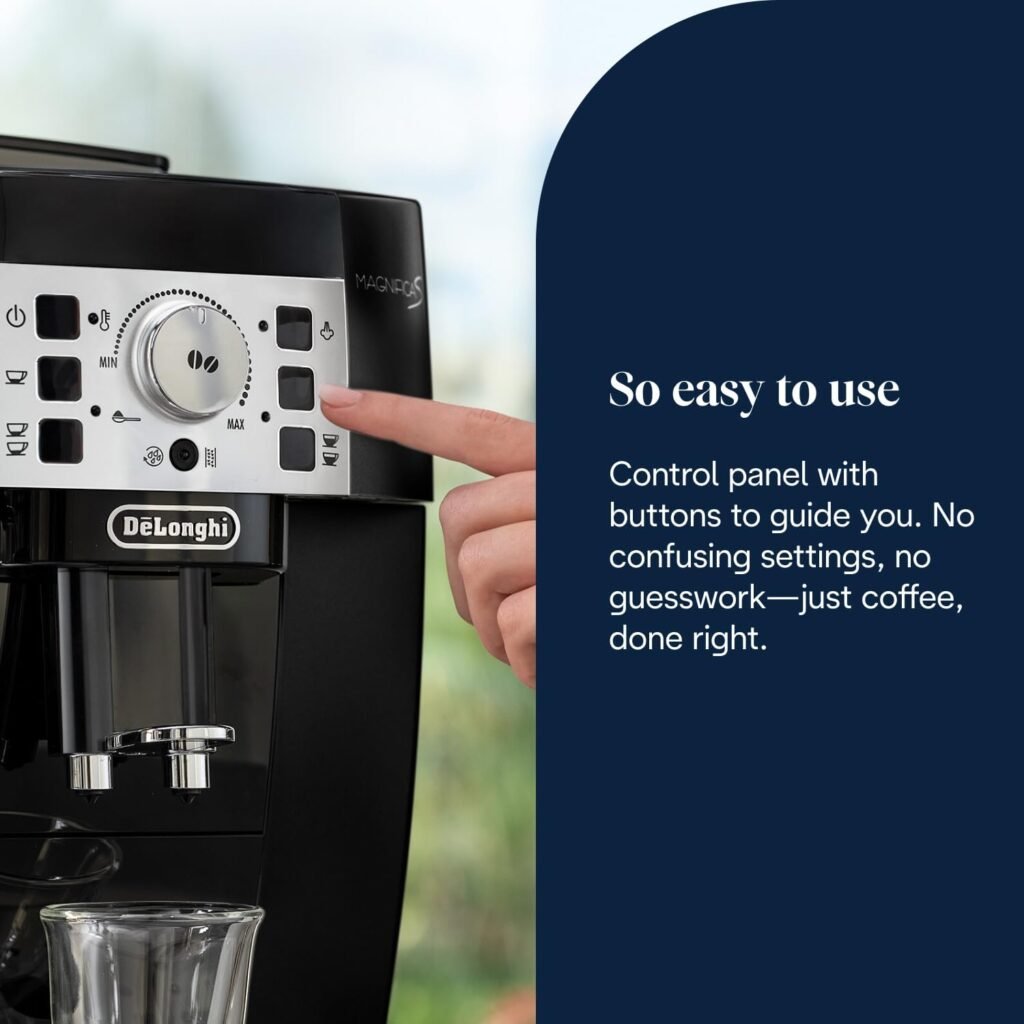
The Magnifica S is genuinely easy to use from day one. The soft-touch control panel has individual buttons for espresso, coffee, and cappuccino. You press one button and collect your coffee. Adjustments to strength and volume are made through a straightforward button-hold interface.
The 1.8-litre water tank is removable and fills at the sink. Given the tank capacity, most households will refill every two to four days depending on usage. The drip tray fills with water from rinsing cycles and discarded pre-infusion liquid — with daily use by two people, emptying it every two days keeps it from overflowing.
The machine performs a rinsing cycle on startup, which heats the internal components and flushes residual coffee oils. This adds about 30 seconds to the time between switching on and the first cup. For most households this is inconsequential.
## Cleaning and Descaling
The Magnifica S is considered straightforward to maintain for a bean-to-cup machine. The drip tray, bean hopper, and brew unit are all removable. The brew unit in particular is the component most critical to clean — it collects coffee grounds and oils. De’Longhi instructs monthly removal and rinsing under warm water. Owners who follow this schedule report machines remaining in good working order after five or more years.
Descaling is prompted by the machine’s indicator light. In hard water areas (South East England, for example), this can occur every two to three months. De’Longhi sell descaling tablets and solution specifically for this machine; generic alternatives work but can void any remaining warranty. The descaling cycle takes around 25–30 minutes.
## How It Compares
**vs Philips 3200 LatteGo (£299):** The Philips has an automatic milk system that is easier to clean — the LatteGo jug rinses in seconds. The Magnifica S has a better-regarded grinder and produces espresso that many owners prefer. Both are similarly priced. The Philips wins on milk convenience; the Magnifica S wins on espresso quality.
**vs De’Longhi Magnifica Evo Automatic (£499):** The Evo adds an automatic milk system and a colour display for easier navigation. If automatic frothing matters to you, the Evo is worth the extra £230. If you are comfortable with a manual wand, the Magnifica S saves money without compromising the core espresso experience.
**vs Sage Barista Express (£699):** The Barista Express is a semi-automatic machine requiring manual tamping and shot-pulling. It offers significantly more control over extraction and can produce better espresso in experienced hands. It is the wrong choice if convenience and ease of use are the priority; it is the right choice if you want to develop barista skills at home.
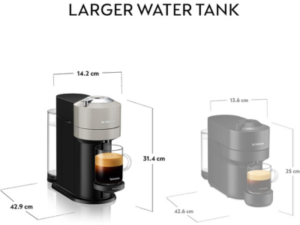
**vs Nespresso Vertuo Plus (£149):** The Nespresso is cheaper, faster, and simpler — but uses proprietary pods at roughly 35–55p each, with no grinder and less flavour complexity. The Magnifica S has higher upfront cost but lower ongoing cost per cup with beans.
## Verdict
The De’Longhi Magnifica S ECAM22.110.B has 50,000 Amazon reviews for a reason. It makes good espresso consistently, cleans itself adequately, and requires no barista knowledge to operate. The 13-setting grinder provides real flavour benefit over pod machines. The manual steam wand requires some practice but is manageable within days for most users. At around £269 — and often less during sales — it represents the most validated entry point into bean-to-cup coffee in the UK market.