This post contains affiliate links. We may earn a commission if you buy via our links, at no extra cost to you. Full disclosure →
Every other ceramic tea plate reviewed in this category pursues either classic elegance (Nicola Spring's Japanese florals, the V&A's Tenniel illustrations) or contemporary restraint (Argon Tableware's professional white, Miicol's bold solid colours). The vancasso Bonita Dessert Plates pursue neither. With 3,557 ratings at 4.5 stars – the second-highest review count among ceramic options in this category – these handpainted stoneware afternoon tea plates bring a deliberately rustic, artisanal character that sits in a completely different aesthetic register from the polished and the patterned. For households whose table aesthetic runs to linen, natural materials, and the warmth of earth tones rather than the crispness of fine china, this tea plates set of 6 is the only option in this category that speaks directly to that sensibility.
The Handpainted Quality
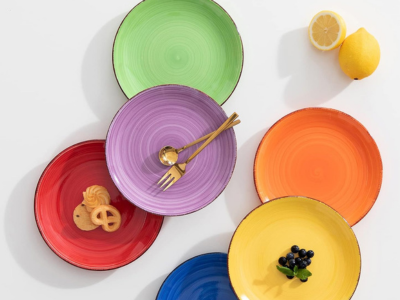
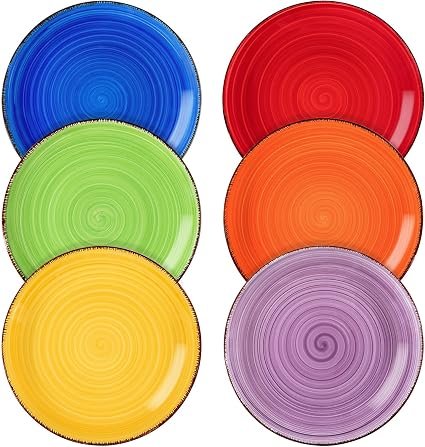
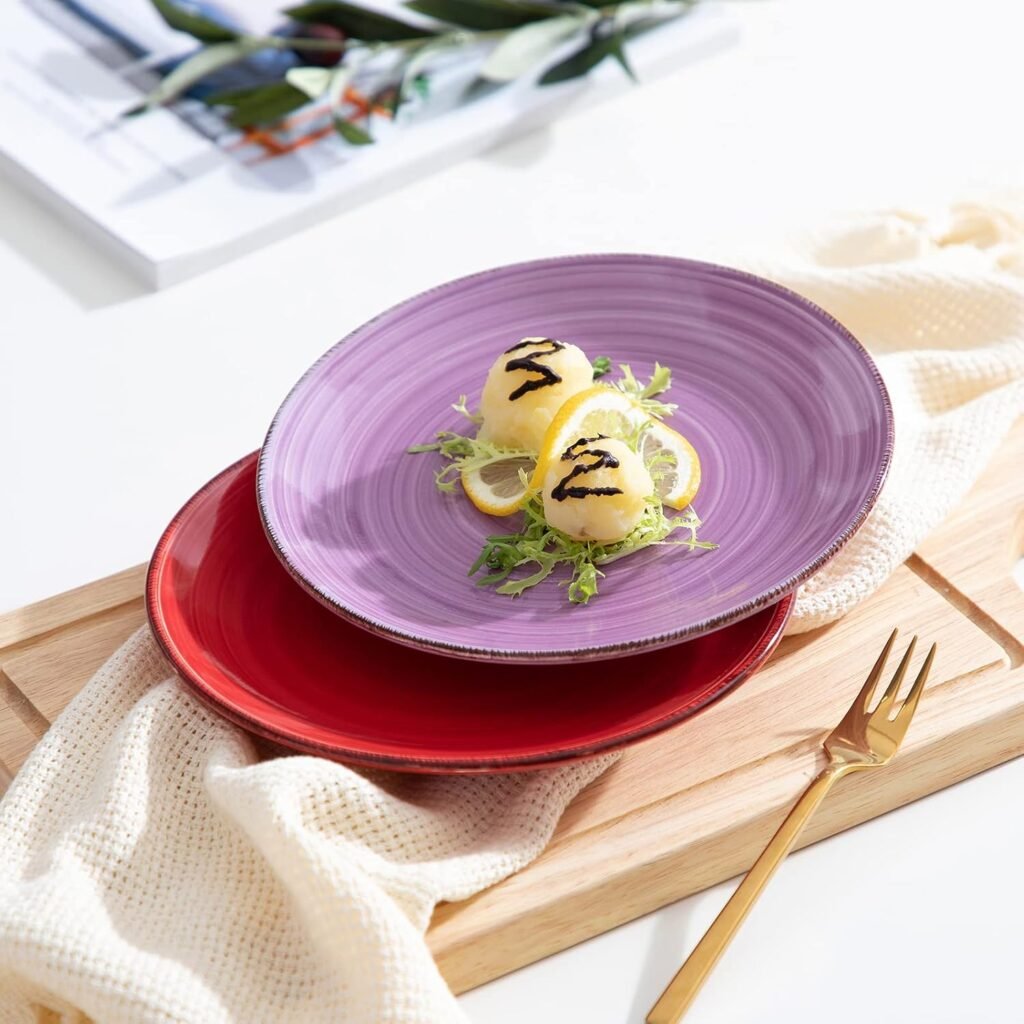
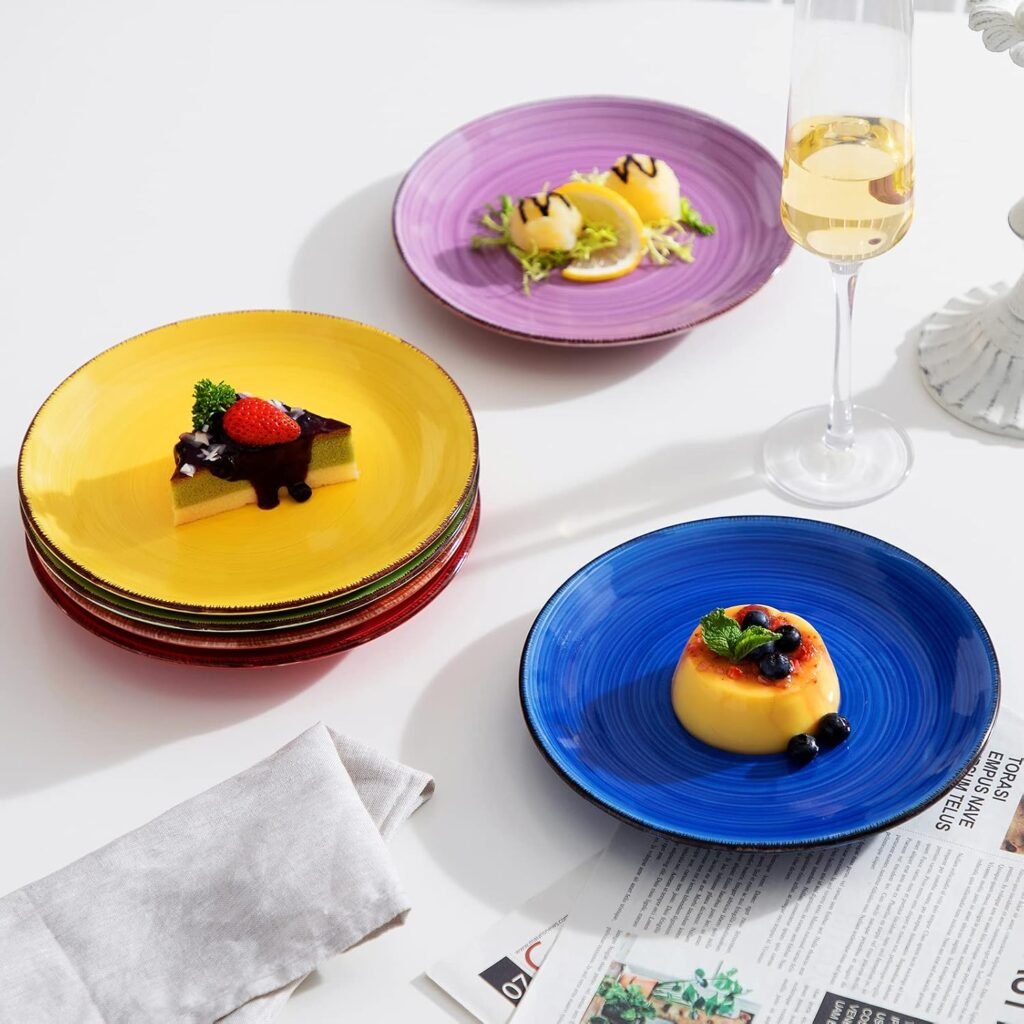
The defining characteristic of the Bonita plates is that each one is individually handpainted. The warm colour variant reviewed here features a swirl glaze design in amber, terracotta, and ochre tones – described by vancasso as resembling a lollipop in its fluid movement – with a fine brown eyelash line outlining the rim. The result is that no two plates in the set are identical: the swirl pattern varies plate to plate as the pigment moves during firing, creating the kind of natural variation that characterises artisan ceramics rather than factory production. For buyers who appreciate handcraft and find mass-produced uniformity aesthetically flat, this inherent variation is the product's appeal rather than a limitation. The pigments are inorganic and applied at high temperature, which vancasso confirms prevents fading after repeated dishwasher cycles – the most common failure point for brightly coloured ceramics.
Stoneware vs Porcelain
The Bonita plates are stoneware – a distinction worth understanding. Unlike porcelain tea plates, which are fired to a refined, translucent finish, stoneware is denser and more textured: heavier in the hand, more tactile on the table, and noticeably more substantial than the porcelain used in the Argon Tableware, Nicola Spring, and vancasso Selene plates. Where fine porcelain reads as light and precise, stoneware reads as earthy and artisanal. On a table setting, the difference is immediately apparent: a stoneware plate has a physical presence that porcelain does not, and that presence is part of the rustic aesthetic these plates deliver. The practical trade-off is weight – stoneware plates are heavier in the hand than equivalent porcelain tea plates, which some buyers find reassuring and others find cumbersome.
The stoneware construction also gives these small tea plates notable durability for everyday use. The listing confirms scratch resistance (tested with knife and fork), and the slight concave centre – designed to prevent sauces and dressings pooling at the rim – is a practical detail that the flat-profile plates in this category do not offer. For an afternoon tea plate used regularly for salads, desserts, and cheese courses as well as tea-time servings, the Bonita's stoneware construction is a genuine long-term advantage.
Warm Colour Palette
The warm colour variant is the more distinctive of the two available options: ambers, terracottas, deep ochres, and warm browns that evoke artisan pottery and Mediterranean ceramics. The cool colour variant offers blues and greens for buyers who prefer a cooler palette while retaining the same handpainted, rustic character. On a table set with linen, wooden boards, and natural materials, the warm palette integrates naturally in a way that neither white tea plates nor vintage tea plates in floral patterns achieve. Against a white tablecloth, the warm tones create a deliberate contrast that reads as collected and curated. Paired with plain tea cups and saucers in earth tones, cream, or matte white, the overall effect is a cohesive artisan aesthetic that is entirely absent from the rest of the afternoon tea plates reviewed here.
Practical Performance
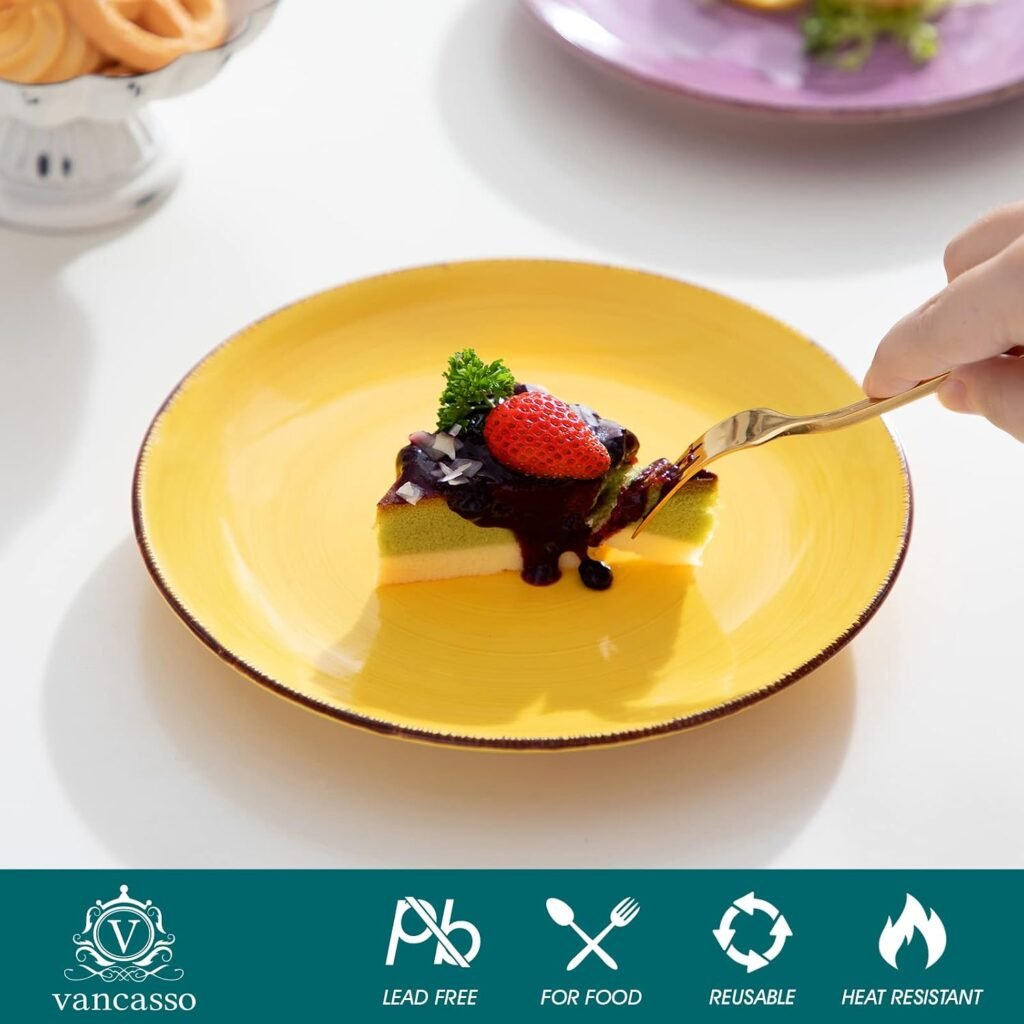
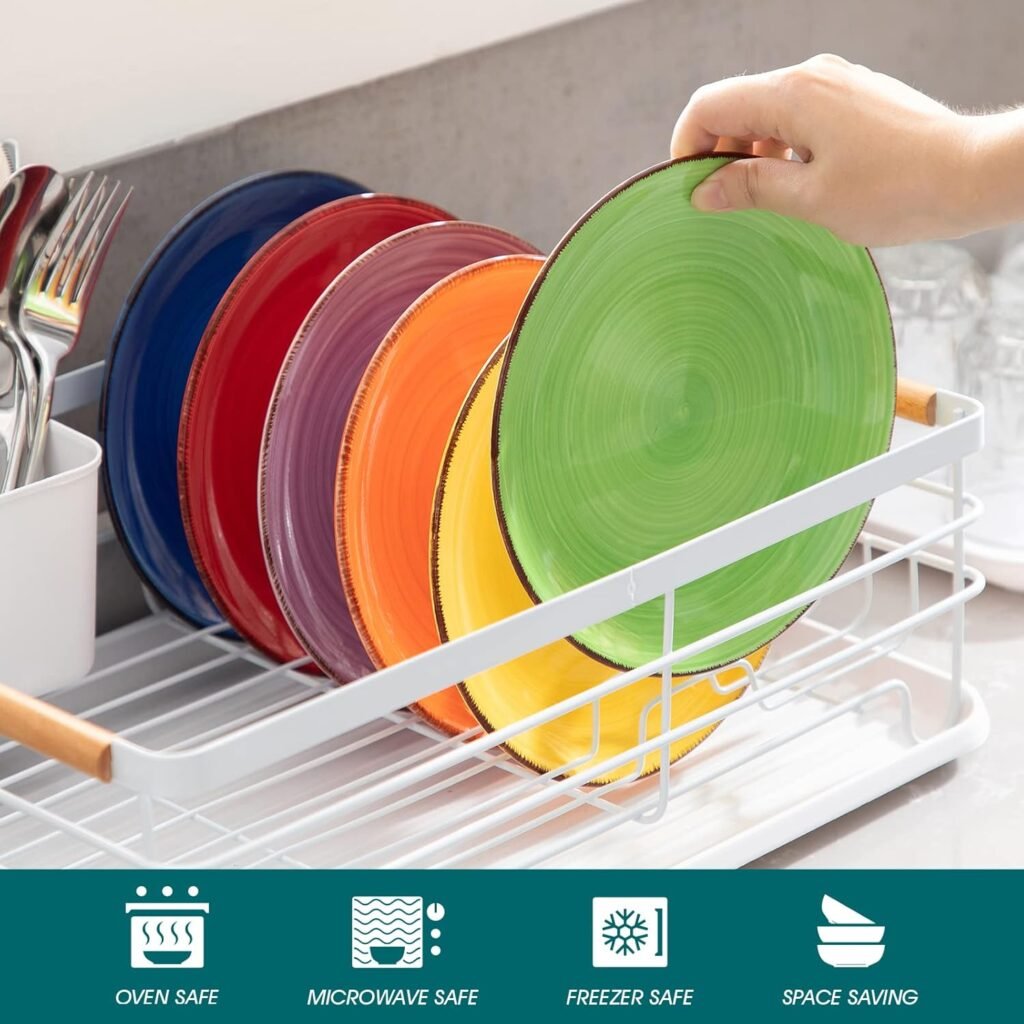
The Bonita plates are microwave, dishwasher, and freezer safe – the full practical set that not all decorated ceramic tea plates achieve. FDA certified non-lead and non-cadmium construction addresses the safety question for coloured glazes directly, and the GRS certification (Global Recycled Standard, cert TE-00335534, independently verified by Intertek) confirms at least 50% recycled material content – the same sustainability credential carried by the Miicol and vancasso Selene plates. The 4.5-star rating from 3,557 buyers provides strong community validation for both the material quality and the dishwasher colour-fastness claim, which is the most frequently contested point in brightly coloured ceramic plate reviews.
Tiered Stands & Sizing
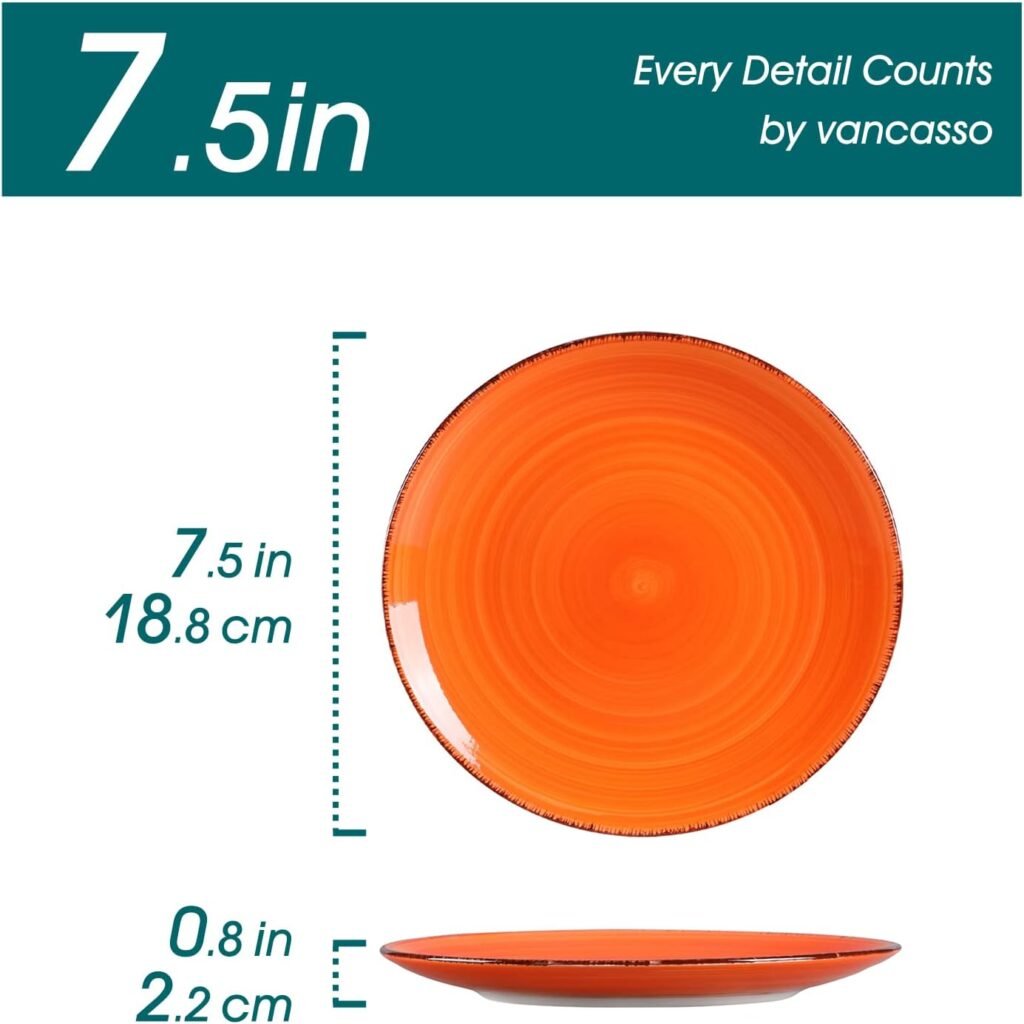
At 18.8cm diameter, these are small tea plates proportioned for desserts, afternoon tea servings, and side portions – directly comparable in size to the Nicola Spring 18cm and Argon Tableware 19cm plates reviewed in this category. The round profile is compatible with tiered plates for afternoon tea stands: the 18.8cm diameter sits within standard tier spacing, making the Bonita a practical choice for a tiered afternoon tea display where a rustic artisanal look is wanted rather than traditional floral or plain white.
How These Compare
Within this category, the Bonita plates sit closest to the Nicola Spring hand-printed range in format – both are round, ceramic, a tea plates set of 6, with a decorative pattern that varies across the set. The aesthetic difference is absolute: Nicola Spring delivers delicate Japanese-inspired botanical florals on a white ground; the Bonita delivers bold warm-toned swirl glazing on a stoneware body. One reads as refined and traditional; the other reads as artisanal and rustic. Buyers seeking vintage tea plates with a classic floral or antique character should look to the Nicola Spring or V&A options; the Bonita occupies a completely different aesthetic register. Against the Argon Tableware plain white tea plates, the comparison is purely a matter of whether the table wants pattern and warmth or neutral professional restraint. Against the V&A fine bone china, the Bonita offers dishwasher safety, a set of 6, and a considerably lower price per plate, at the cost of the museum provenance and gold detail that justify the V&A premium.
Who Should Buy These
These are the right afternoon tea plates for buyers whose table aesthetic runs to rustic, artisanal, and warm – households that style with linen, natural wood, pottery, and earth tones rather than the crisp formality of white tea plates or the floral charm of vintage tea plates. The 4.5-star rating from 3,557 buyers makes this tea plates set of 6 the second most community-validated ceramic option in the category, and the handpainted stoneware construction delivers a material quality and visual character that no mass-produced patterned plate can replicate. If you want traditional afternoon tea elegance, the Nicola Spring or V&A options are the better choices. If you want a decorated round ceramic tea plates set with rustic artisan warmth and full dishwasher and microwave safety, the Bonita is the only answer in this category.