This post contains affiliate links. We may earn a commission if you buy via our links, at no extra cost to you. Full disclosure →
First Impressions: Design-Led at a Premium Price
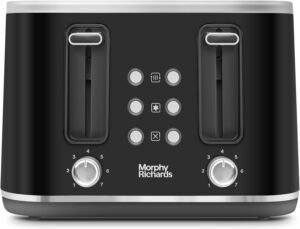
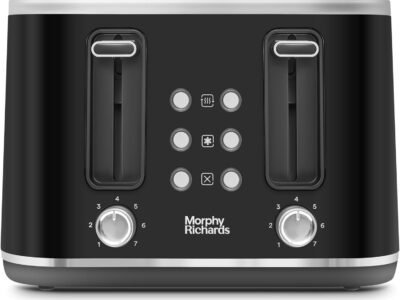
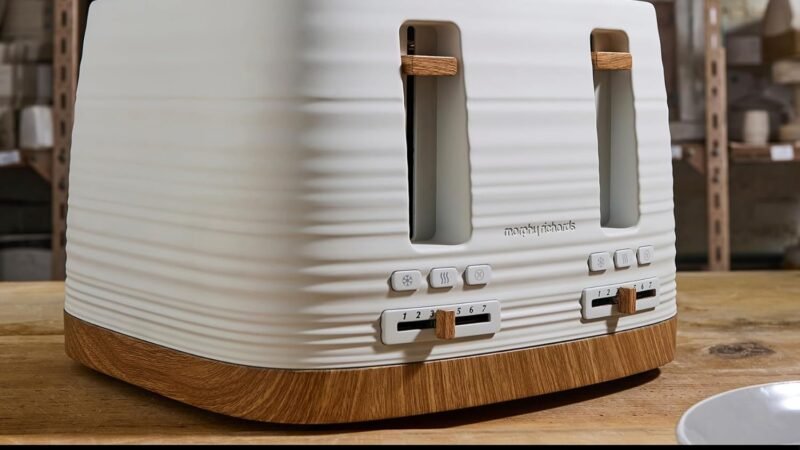
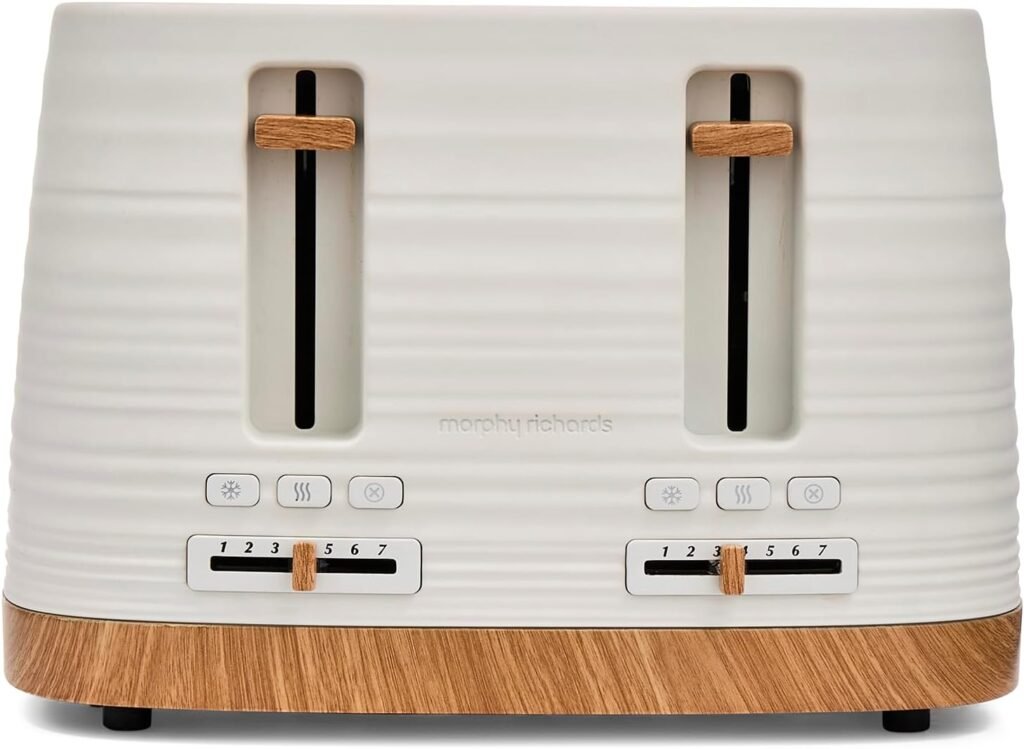
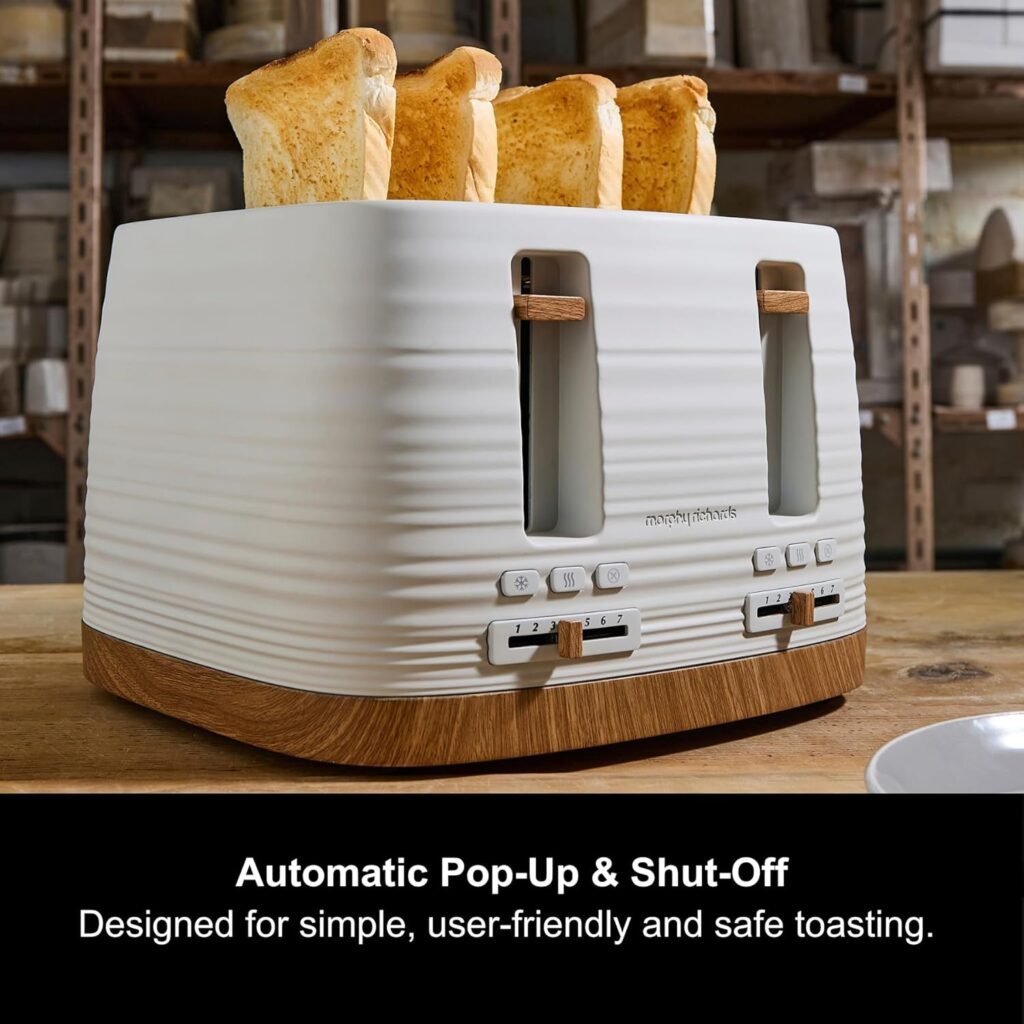
The Morphy Richards Clay 4 Slice Toaster makes no apologies for being primarily a design statement. Named after the Clay collection and finished in a smooth, textured China Clay white, it draws inspiration from the organic, matte feel of earthenware ceramics — a departure from the ubiquitous brushed stainless steel that dominates the 4-slice toaster market at this price point. With a matching Clay kettle available and colour options including Brown-Felspar, Grey-flint and Navy, this is a toaster for buyers who want a cohesive, distinctive kitchen aesthetic.
Design & Build Quality
The Clay’s construction uses galvanised sheet, mica plate, bakelite and silicone — a material blend that produces a solid, sturdy feel in the hand. The matte clay-inspired finish is genuinely distinctive and holds its appearance well in daily use. The anti-slip rubber feet keep the toaster firmly in place. Integrated cord storage keeps the worktop tidy.
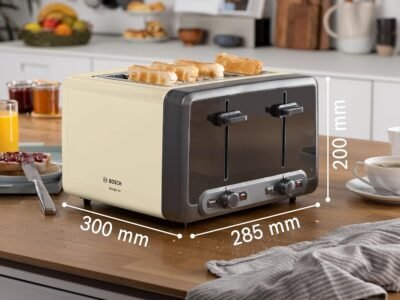
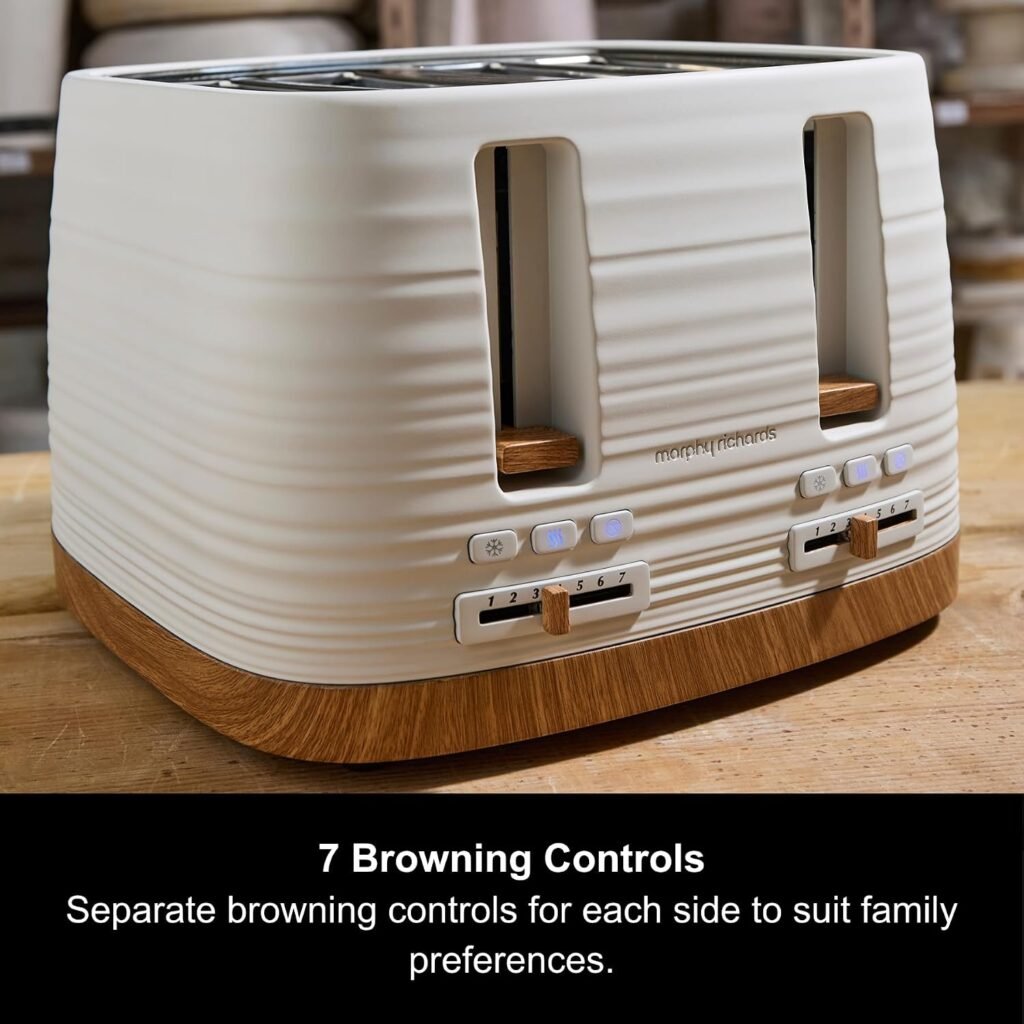
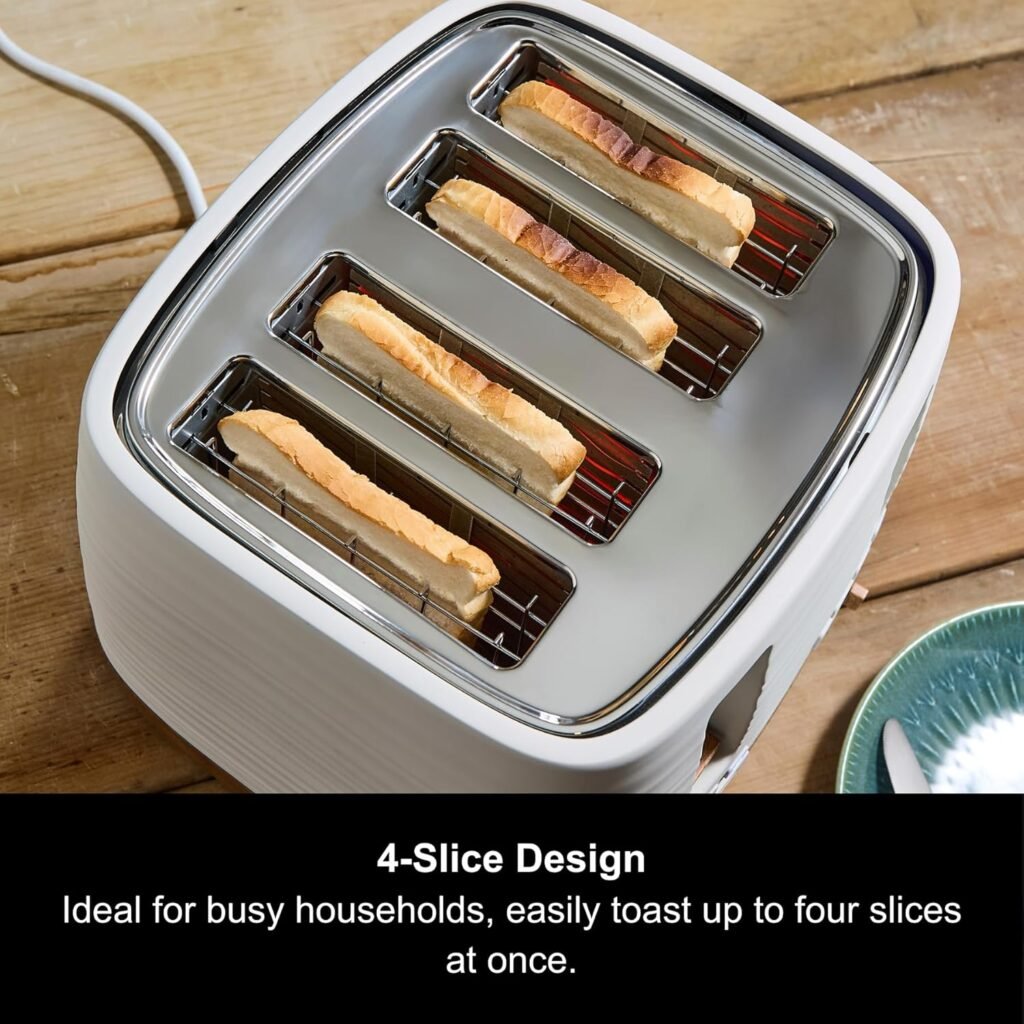
A particularly appreciated design feature: the top surface of the toaster is smooth, with no groove or channel running around the slot openings. This is a direct improvement over toasters like the Bosch DesignLine that have a crumb-collecting trough requiring periodic inversion to clear. Morphy Richards has eliminated this problem entirely. The blue-illuminated buttons are another quality-of-life detail that several reviewers specifically praise — easy to locate in a dim kitchen, and they look genuinely stylish in operation.
Toasting Performance
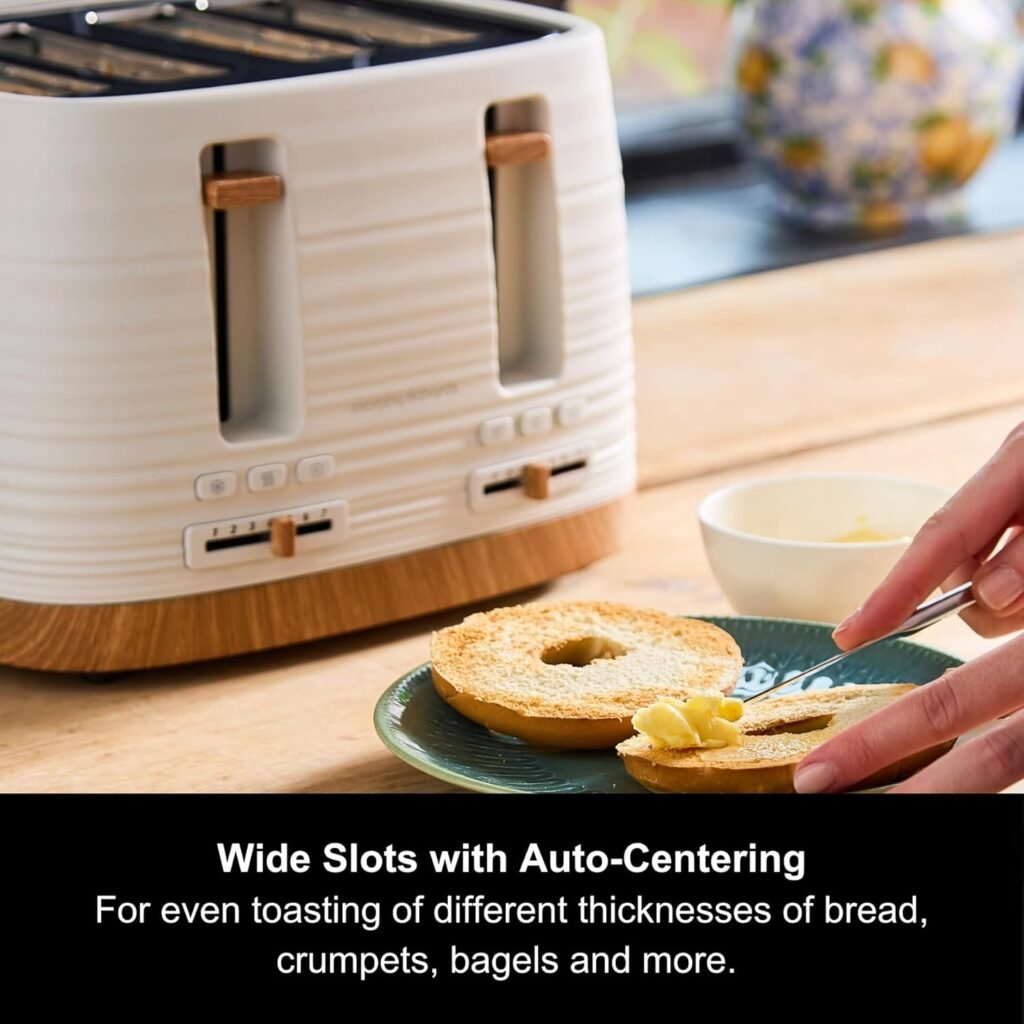
The Clay delivers on its core function. Auto-centering ensures bread is consistently positioned within the slots, producing even browning across the full face of the slice. Multiple reviewers comment on the even results, including one who described it as the first toaster they had owned that toasted evenly on both sides. The toasting speed is slightly slower than some rivals — one reviewer described it as taking longer than some toasters, noting it as a slight inconvenience rather than a dealbreaker.
The variable browning dial has a tactile groove allowing sightless use, and the browning settings produce audible clicks — a thoughtful accessibility feature that sets it apart from rivals with purely visual controls.
Understanding the Slot Controls: An Important Note Before Buying
The Clay has separate browning dials for the left and right slot pairs, which might suggest fully independent 2+2 operation. In practice, the behaviour is more limited: the right-hand slots can only be activated when the left-hand slots are already running, and both sides end their cycle at the same time.
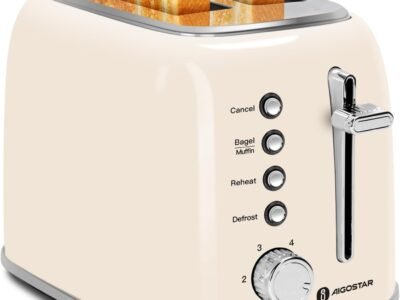
This means that if you load the left slots first, then add the right slots a minute later, the right side will have had less toasting time when the cycle ends. For a toaster at £79, where independent slot control is a feature buyers reasonably expect, this is a genuine limitation worth knowing before purchase. Most households toasting four slices simultaneously will not notice any difference, but those planning to use the two sides independently should consider alternatives with true 2+2 independence, such as the Aigostar Gordon 30ZGE or De’Longhi Eclettica.
Functions: Cancel, Reheat and Defrost
All three standard functions are present and work reliably. The Defrost setting gently brings frozen bread up to temperature before browning — reviewed positively for producing crisp rather than dried-out results on frozen slices. Reheat warms toast without additional browning. Cancel halts the cycle immediately. The High Lift feature raises the carriage above the standard pop-up position, making it easy to retrieve crumpets, small bread rolls and half-slices without touching the hot surrounds.
What We Don’t Like
The slot control dependency is the primary issue at this price point. Buyers expecting fully independent left/right operation will be disappointed. Some users also report that the bread holders are not particularly strong, meaning bread can lean sideways in the slot — causing one face to toast more than the other. This is partially mitigated by the auto-centering feature, but it is worth loading bread carefully.
At £79 with no current discount, the Clay is priced above better-specified competitors. The Bosch DesignLine Plus, Haden Salcombe and De’Longhi Eclettica all offer superior slot independence at lower prices.
Value for Money
At £79, you are paying for design distinctiveness and brand heritage. The toasting performance is good, and the smooth top and blue illumination are genuine plus points. But the slot control limitation means it does not match the functional specification of several cheaper alternatives. If the Clay’s aesthetic is the specific draw — and for many buyers it will be — then the premium is justified on those terms alone.
Verdict
The Morphy Richards Clay 243102 is a handsome, well-built toaster that toasts reliably and looks genuinely distinctive in a kitchen. The smooth top, blue illumination, auto-centering and clay-inspired design set it apart aesthetically. However, the right-slot dependency is a real functional limitation at £79, and buyers who plan to use the two sides independently should be aware of this behaviour before purchasing. For those who prioritise a specific design aesthetic and matching kettle coordination, this remains a worthwhile choice — just go in with clear expectations.