This post contains affiliate links. We may earn a commission if you buy via our links, at no extra cost to you. Full disclosure →
Looking for an AMZCHEF cold press juicer review? This guide covers the 165mm wide-chute model: its 600W DC motor, dual strainer system, 2.5L hopper, and whether the extra chute width genuinely reduces prep time compared to narrower slow juicers at a similar price.
What Is a Cold Press Juicer — and Why It Matters
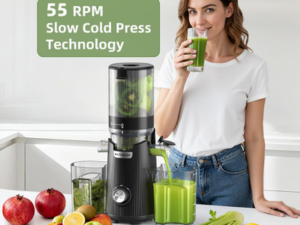
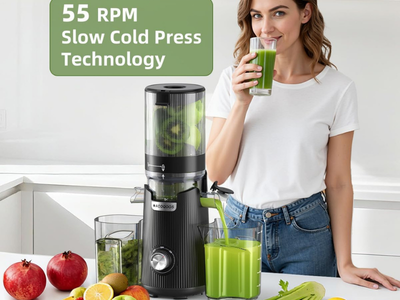
Cold press juicers — also called slow juicers, masticating juicers, or slow press juicers — extract juice using a fundamentally different method from the centrifugal models most people grew up with. Instead of high-speed spinning blades, a single rotating auger slowly crushes and squeezes produce against a fine mesh strainer at between 40 and 80 RPM. The low speed is deliberate: it introduces almost no heat into the juice and keeps oxidation to a minimum.
Why does that matter? Heat and oxidation are the two main enemies of fresh juice quality. Spinning fruit at 10,000 RPM generates friction that warms the juice, while the fast rotation pushes oxygen through it — both processes break down heat-sensitive vitamins (C and B in particular), degrade enzymes, and cause the juice to oxidise visibly within minutes. That familiar browning is the result. Cold pressed juice from a slow masticating juicer machine stays fresh in an airtight bottle in the fridge for up to 72 hours, compared to 24 hours for centrifugal juice, and the flavour is noticeably more vivid and clean.
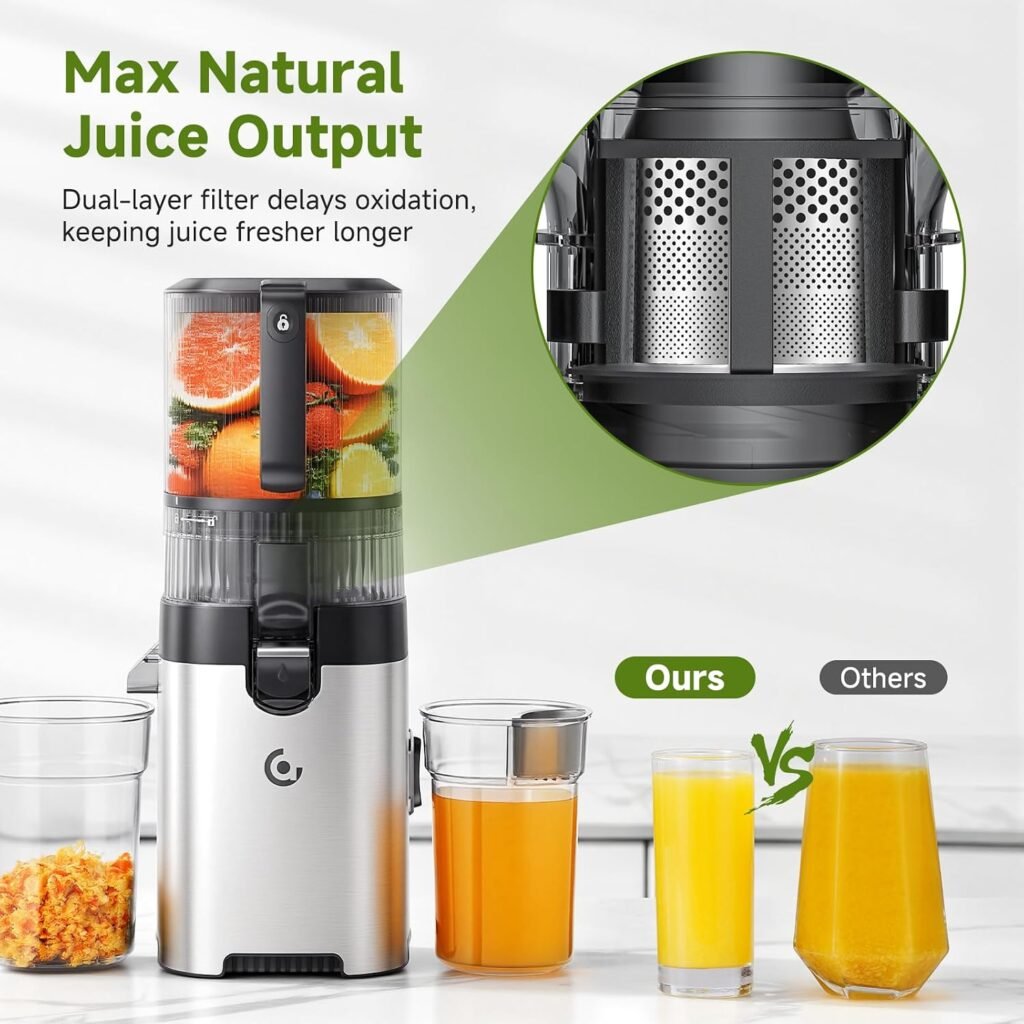
There is also an efficiency argument. A cold press juicer typically extracts 15–30% more juice from the same amount of produce as a centrifugal machine, because the slow squeeze wrings the cell walls more completely. That means less shopping, less food waste, and a lower effective cost per glass over time. Leafy greens — spinach, kale, wheatgrass — show the greatest improvement; centrifugal machines notoriously yield almost nothing from greens, while a masticating cold press juicer extracts them effectively.
About AMZCHEF: Cold Press Juicer Brand Background
AMZCHEF is a kitchen appliance brand that has built a strong following on Amazon UK by engineering well-specced products at competitive prices. They are not a heritage juicer brand in the way that Hurom (who invented the slow juicer format in 1974) or Kuvings are, but their products consistently earn 4.2–4.5 star ratings with thousands of verified reviews. This model — the B0GVZ132BF — is their flagship cold press juicer machine, featuring a third-generation 600W DC motor and the wide 165mm feed chute design that distinguishes it from their smaller 118mm version.
AMZCHEF Cold Press Juicer: Design and Build Quality
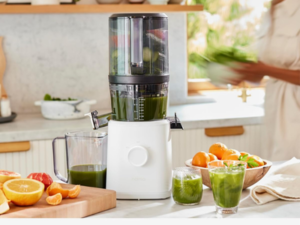
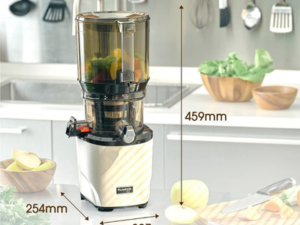
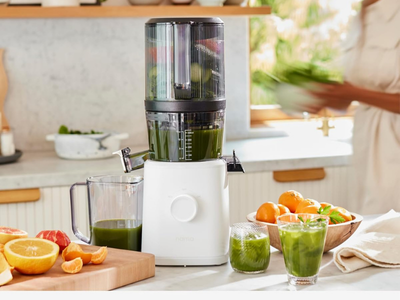
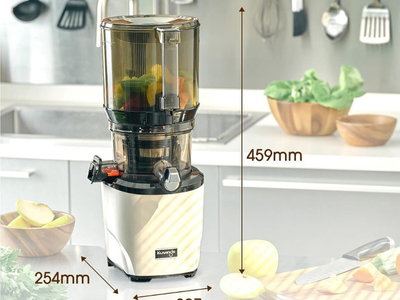
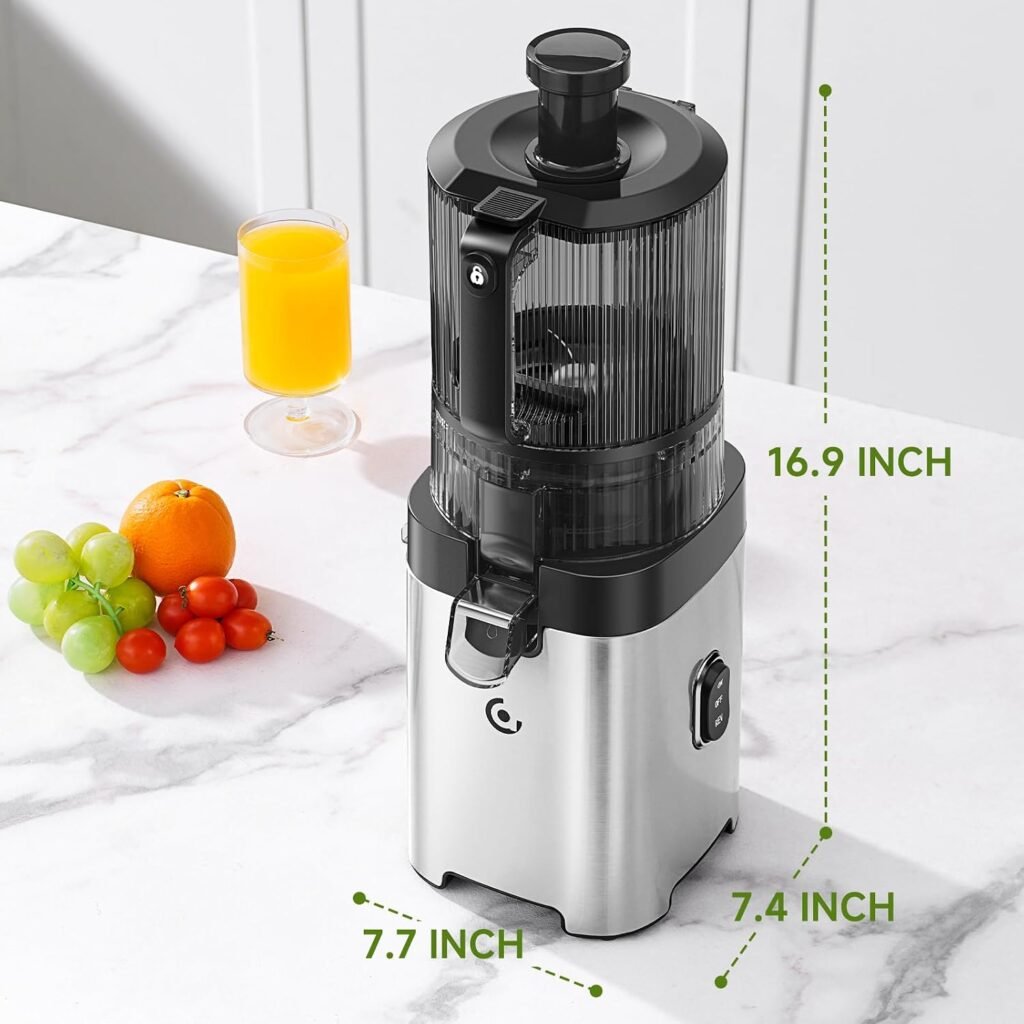
The AMZCHEF cold press juicer uses an upright form factor — the motor base sits at the bottom, with the 2.5-litre hopper, auger assembly, and strainer stacking vertically above it. At 43 × 19.5 × 18.7 cm it has a reasonable worktop footprint for a machine with a 165mm chute. The silver finish is clean and modern; a black silver variant is also available for those who prefer a darker kitchen aesthetic.
Construction uses BPA-free plastic throughout the food-contact components — the same material standard as the Ninja cold press juicer and Nutribullet cold press juicer at comparable price points. It will not feel as weighty or premium as a Kuvings EVO820 or Hurom H-AA, both of which use higher-grade materials at three to five times the price. For everyday family use at this price bracket, however, the build is solid and designed to last.
The 165mm Feed Chute: A Genuinely Meaningful Upgrade
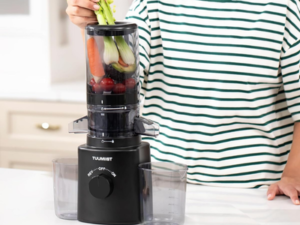
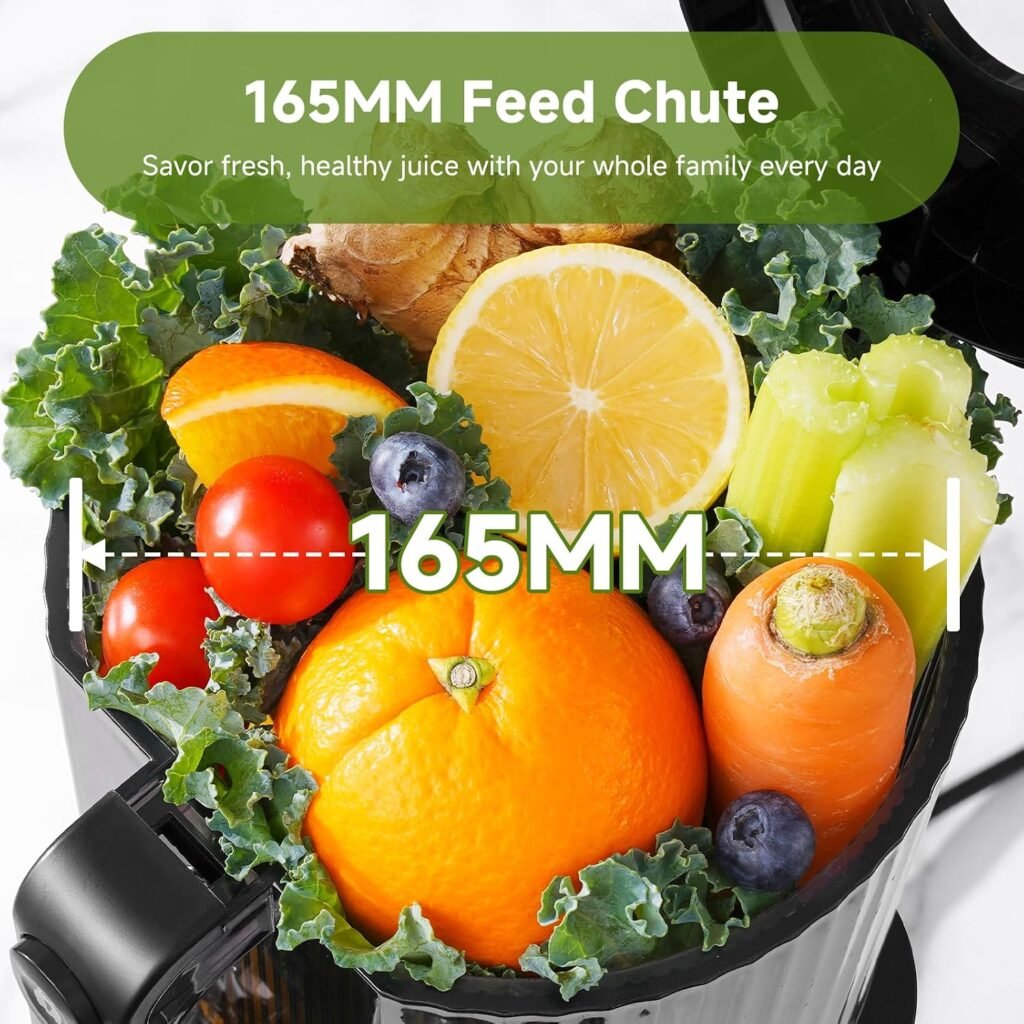
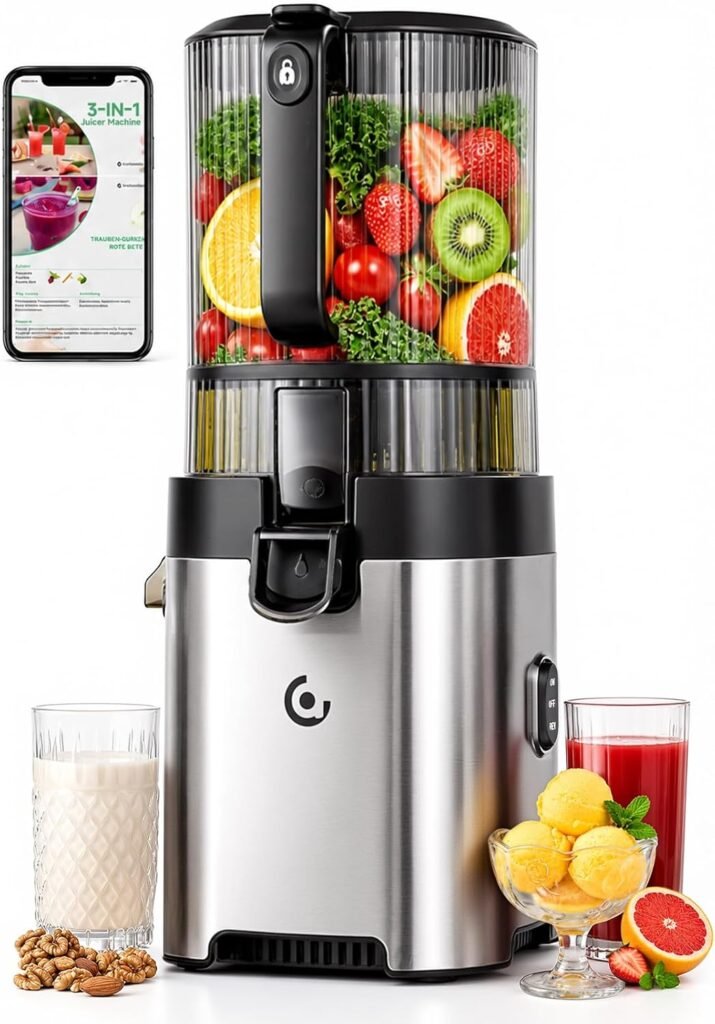
The 165mm extra-large feed chute is the headline specification, and it earns the emphasis. For context: most cold press juicers in the £80–£200 range use feed chutes between 75mm and 100mm in diameter. At that size, you spend 10–15 minutes before juicing even starts — quartering apples, halving oranges, stripping and chopping celery. With a 165mm chute, a whole medium apple, a full pear, or an uncut celery stalk drops straight in. Prep time for a standard morning juice drops from 15 minutes to 2–3 minutes.
The built-in pre-cut blade inside the chute completes the design. Before ingredients reach the auger, the blade slices them into manageable portions. This prevents large whole fruits from overwhelming the slow masticating mechanism if fed too quickly, and creates more surface contact with the strainer, which improves juice yield. The result: you can add ingredients at a comfortable, continuous pace without babysitting the feed rate — a genuine advantage over narrow-chute slow juicer machines that require careful, slow hand-feeding.
600W DC Motor: Third-Generation Performance
The motor is the most critical component in any slow masticating juicer. Too weak, and the machine stalls on beetroot, carrot, or dense leafy greens. Too fast, and you lose the cold press benefit. Many budget cold press juicer machines run on 150–400W, which can struggle with hard root vegetables and produce noticeable heat from friction under sustained load.
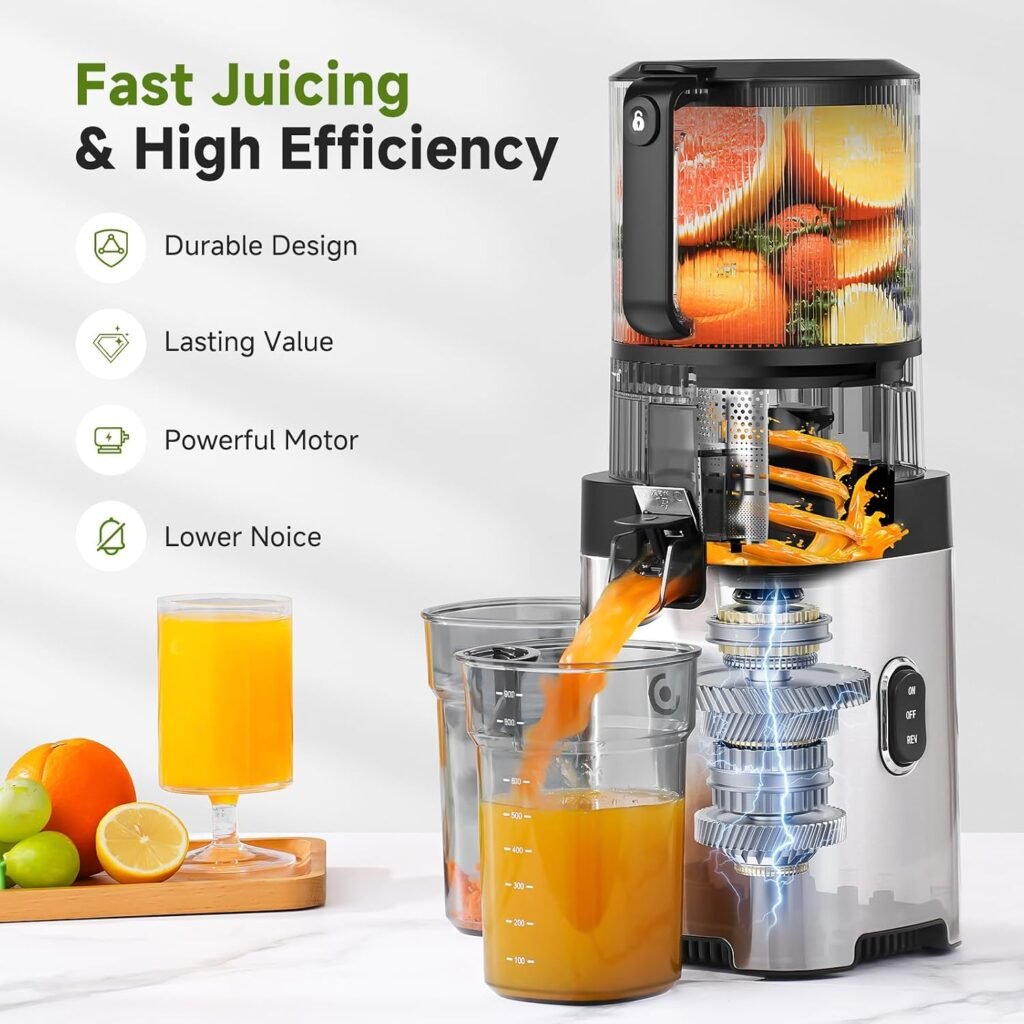
AMZCHEF’s 600W DC motor is notably powerful for this price class. DC motors have a specific advantage in slow juicer applications over older AC motors: they maintain high torque at low RPM without generating excess heat, which directly supports cold press extraction. The motor pushes the auger slowly and powerfully through tough ingredients — carrots, ginger, frozen fruit — without the mechanical heating that would undermine the low-temperature juicing benefit.
DC motors also run quieter than AC equivalents at comparable power levels. This machine operates at approximately 60–70 dB during juicing — similar to a background conversation — making it practical for early morning use without disturbing the rest of the household. AMZCHEF’s third-generation designation refers to iterative improvements over their earlier designs, specifically citing more stable performance under load and reduced heat buildup during extended continuous runs through the 2.5L hopper.
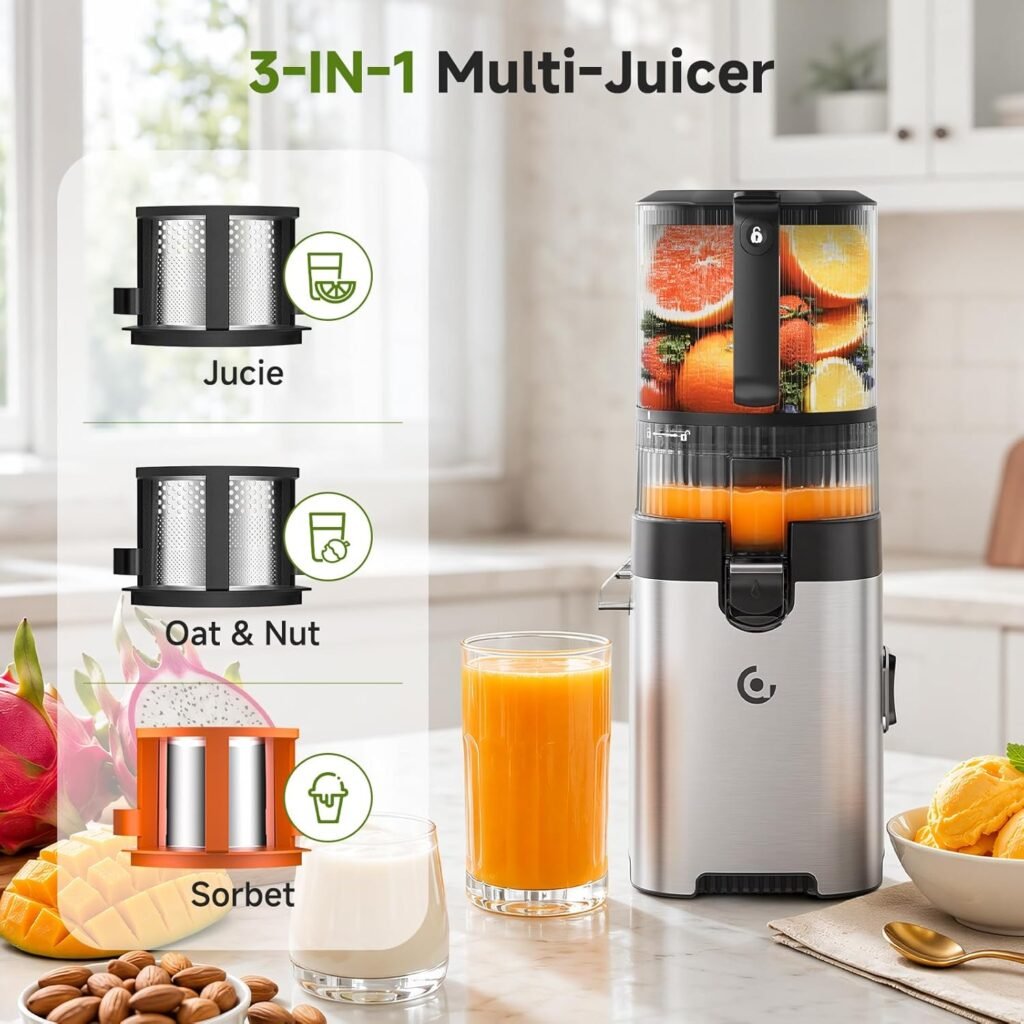
Dual Strainer System: Juice, Nut Milk, and Sorbet
Many cold press juicer machines ship with a single fine-mesh strainer for standard juice extraction. The AMZCHEF includes two, significantly broadening the machine’s usefulness:
Fine mesh strainer (juice mode): Standard cold press extraction for fruits, vegetables, and leafy greens. The fine filtration produces smooth, relatively pulp-free juice. If you prefer a fibre-rich, pulpier result, reduce the rinse time on the strainer between batches.
Blank/coarse strainer (nut milk and sorbet mode): With this strainer fitted, the machine extrudes ingredients through larger openings rather than filtering them. Soak almonds, cashews, or oats overnight, blend briefly with water, then run through the blank strainer for fresh nut milk — smoother than blender methods and without the need for a separate nut milk bag. For fruit sorbet, freeze chunks of banana, mango, or mixed berries and run through the blank strainer: the auger crushes them into a thick, creamy frozen dessert with no added sugar, dairy, or preservatives.
This dual-mode capability is standard on premium slow press juicers like the Kuvings Revo830 (£499) and Hurom H-AA (£349), but uncommon in the sub-£120 cold press juicer market. Its inclusion adds real value.
The 2.5L Hopper: Continuous Batch Juicing
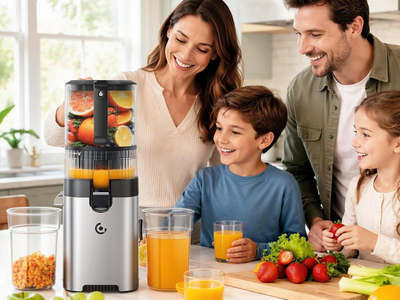
The 2.5-litre hopper capacity is generous for this price class. Most compact cold press juicers use 700ml–1L juice collection jugs, which means pausing, emptying, and reloading mid-batch. The AMZCHEF’s larger hopper lets you load a full morning recipe — four apples, two celery stalks, a thumb of ginger, a handful of spinach — in a single fill. The machine works through the batch while you get on with the rest of your morning. This hands-free continuous juicing capability mirrors what you would normally find on commercial slow juicer machines at significantly higher price points.
AMZCHEF Cold Press Juicer: Ease of Cleaning
More cold press juicers end up unused in cupboards than any other kitchen appliance, and the most common reason is cleaning effort. The AMZCHEF’s 4-piece tool-free design directly addresses this. The four removable components — auger, strainer, juice bowl, and pulp container — twist off without tools and rinse clean under a tap in 60–90 seconds. The included cleaning brush handles stubborn pulp caught in the mesh strainer.
This compares favourably with complex slow juicer machines that have 8–12 separate parts requiring careful disassembly. Fewer parts means faster cleaning and, critically, a higher probability that you will actually use the machine every day rather than reserving it for weekends.
AMZCHEF Cold Press Juicer Performance Across Common Ingredients
Based on the product specifications and 5,019 Amazon ratings (4.3 stars), here is how the AMZCHEF 165MM cold press juicer performs across typical produce:
- Fruits (apples, pears, oranges, grapes): Excellent. Whole medium fruits drop straight in; high juice yield with minimal wet pulp.
- Leafy greens (spinach, kale, celery): Very good. The slow masticating method extracts greens far more effectively than centrifugal machines. Celery benefits particularly from the wide chute — full stalks, no chopping.
- Root vegetables (carrots, beetroot, ginger): Good. The 600W motor provides sufficient torque for dense root veg without stalling, which lower-wattage cold press machines often cannot manage.
- Citrus fruits: Good for cold pressed citrus. The slow extraction is gentler on citrus peel than centrifugal methods, producing a less bitter juice.
- Frozen fruit (sorbet mode): Good. Banana and mango work well; very hard frozen ingredients benefit from 10 minutes partial thawing first.
- Nut milk: Good. Soaked nuts run through the blank strainer produce smooth, creamy milk. Brief pre-blending of nuts with water before juicing improves consistency.
How the AMZCHEF Compares to Competing Cold Press Juicers
Understanding where this machine sits in the cold press juicer market helps clarify its value:
- vs. Ninja Cold Press Juicer JC152UK (~£120): The AMZCHEF has more than double the chute diameter (165mm vs 75mm), a more powerful motor (600W vs 400W), and a much larger 2.5L hopper versus the Ninja’s 700ml jug. The Ninja is more compact, better for occasional use in smaller kitchens. For daily juicing or family servings, the AMZCHEF offers significantly more capacity at a comparable price.
- vs. Nutribullet Cold Press Juicer (~£99): Similar price bracket. The AMZCHEF’s 165mm chute and pre-cut blade dramatically reduce the prep time the Nutribullet requires. The Nutribullet scores on brand recognition; the AMZCHEF wins on raw specification.
- vs. Kuvings Cold Press Juicer EVO820 (~£499): The Kuvings EVO820 is a premium masticating juicer with superior juice purity, a die-cast metal auger, and a 10-year motor warranty. For maximum juice quality and long-term build durability, the Kuvings remains the benchmark. The AMZCHEF is the right entry point for those new to cold press juicing who are not ready to commit £499 upfront.
- vs. Hurom Cold Press Juicer H-AA (~£349): Hurom pioneered the slow juicer category and the H-AA is one of the finest home masticating juicers available. Like the Kuvings, it represents a long-term investment in quality. The AMZCHEF is approximately 3× cheaper and delivers the cold press experience effectively for the vast majority of daily users.
Who Should Buy the AMZCHEF 165MM Cold Press Juicer?
This AMZCHEF slow juicer is an excellent fit for:
- First-time cold press buyers wanting to experience slow masticating juice quality without investing £300–£500
- Families needing enough capacity to juice for multiple people in a single batch
- Daily juicers who want to minimise morning prep — the wide chute and pre-cut blade make a real difference to routine
- Health-conscious cooks who want fresh juice, nut milk, and fruit sorbet from a single affordable machine
It is a less obvious choice for serious juicing enthusiasts who prioritise the highest possible juice yield and purity — in that case the Kuvings EVO820 or Hurom H-AA are worth saving for. But for everyone else starting out with cold press juicing, the AMZCHEF 165MM represents excellent value.